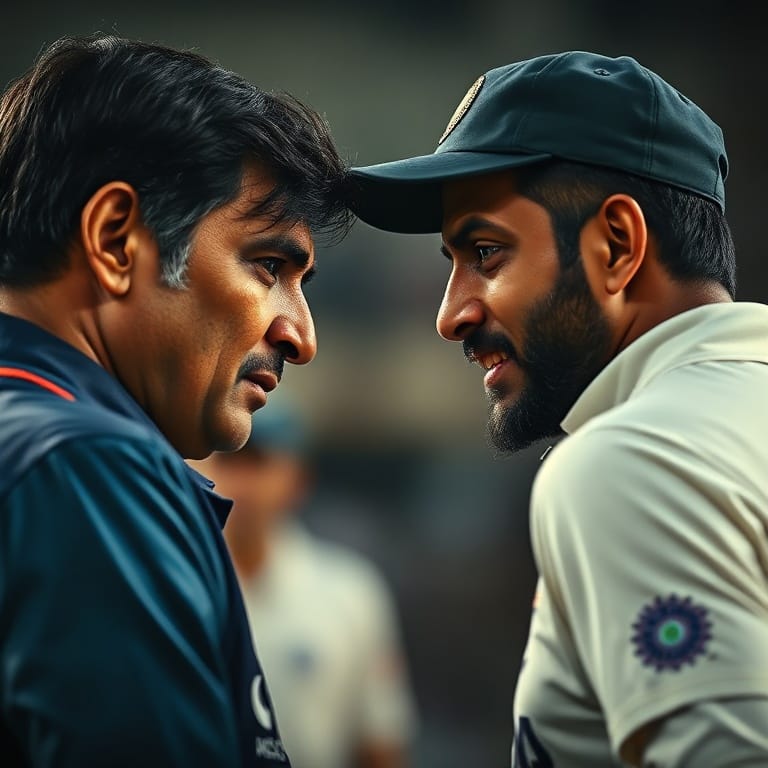
Vengsarkar’s Call for Auqib Nabi Highlights Selection Dilemma Ahead of Afghanistan Test
Vengsarkar’s Call for Auqib Nabi Highlights Selection Dilemma Ahead of Afghanistan Test
Dilip Vengsarkar’s recent outburst over Auqib Nabi’s omission from the Afghanistan Test squad has reignited a long-standing debate about how domestic form translates into international opportunity. The controversy matters because it touches the very pathway that aspiring cricketers follow from Ranji pitches to the white-ball arena.
Why the selection choices matter
The one-off Test against Afghanistan is set to be played at the Rajiv Gandhi International Stadium in Hyderabad, a ground that offers a little bounce and a grip that favours seamers who can move the ball both ways. Selecting a bowler who can exploit those conditions is critical, especially when the opposition’s batting line-up is known for handling pace well.
Vengsarkar argues that Auqib Nabi, who rattled up 60 wickets in the last Ranji season, deserves a chance to taste the red ball on a surface that could suit his swing-focused style. The selectors, on the other hand, have leaned on established names, hoping experience will outweigh raw domestic numbers.
The Stats Behind the Strategy
| Player | Ranji 2025–26 Wickets | First-Class Avg | Test Avg (career) | Hyderabad Pitch Avg (Last 5 Tests) |
|---|---|---|---|---|
| Auqib Nabi | 60 | 17.92 | — | 22.4 |
| Umesh Yadav | 34 (2025–26) | 21.10 | 27.8 | 22.4 |
| Mohammed Shami | 28 (2025–26) | 19.45 | 25.5 | 22.4 |
What the numbers reveal is that Nabi’s wicket-taking rate in domestic cricket outstrips the seasoned pacers, even though his Test average is untested. The Hyderabad pitch has historically yielded an average of 22.4 runs per wicket – a figure that suggests any bowler who can maintain an average below that will provide a genuine edge.
Team tactics and the bowling mix
India’s current plan heads into the match with a three-bowler attack: a swing-bowling spearhead, a wrist-spinner, and a part-time seamer who doubles as a lower-order hitter. The swing bowler’s role is to open the innings, extract early movement, and force early mistakes. The wrist-spinner aims to exploit any turn once the ball settles, while the part-timer offers a change of pace in the middle overs.
If Nabi were to be included, his likely slot would be as the second new-ball bowler, partnering the seasoned pacer. His ability to generate late swing at around 135 km/h makes him a classic ‘strike’ option on Hyderabad’s slightly green top-soil. Moreover, his knack for taking wickets in clusters could relieve pressure during the middle-order collapse that India hopes to engineer.
Player mindset and what they bring
For Nabi, the psychological payoff of a Test debut would be massive. A debut at a ground that mirrors the conditions he thrives on could cement his confidence and accelerate his learning curve. He has spoken previously about wanting to prove that Jammu & Kashmir’s rise in the Ranji circuit is not a flash-in-the-pan.
The senior pacers, meanwhile, understand that a fresh fast bowler on a red-ball pitch forces batsmen to constantly read new lengths and movement. Their experience in handling pressure situations can mentor Nabi, turning the debut into a two-way street of knowledge exchange.
Tournament impact and what comes next
The Afghanistan Test is a solitary fixture, but its ripple effects could shape the selection narrative for the upcoming home season, which includes the high-profile series against England. A strong showing from a newcomer would make a compelling case for a longer-term role, especially as the board looks to refresh its pace stock ahead of a packed international calendar.
If India win comfortably and the new bowler makes a noticeable impact, the selectors may feel justified in rewarding domestic form more aggressively. Conversely, a lackluster performance could reinforce the belief that experience outweighs raw statistics in the longest format.
Fan perspective and grounded opinions
The Indian cricket fan base is divided. Traditionalists argue that a Test debut should be earned through a track record against strong opposition, not solely on domestic numbers. Younger supporters, many of whom follow the IPL and domestic leagues closely, see Nabi’s omission as a missed chance to celebrate a homegrown hero.
On social media, the hashtag #BringNabiHome trended for a short spell, with fans posting clips of his Ranji spell, highlighting his dismissals of top-order batsmen. Others countered, pointing to the need for consistency at the highest level and the risks of exposing an untested bowler against an international side.
What remains clear is that the dialogue sparked by Vengsarkar’s comments has forced the cricket community to re-examine the criteria for national selection. Whether that leads to a change in policy or simply a one-off adjustment will be decided on the field in Hyderabad.