PBKS vs RR: High-Scoring Chase Raises Safety Concerns
PBKS vs RR Clash: Power-Hitting, Strategy, and Safety Concerns
The clash between Punjab Kings and Rajasthan Royals at New Chandigarh’s Mullanpur Stadium turned into a talking point far beyond the scoreboard. A six from Punjab’s debutant Priyansh Arya flew into the crowd, striking a fan, while the Royals chased down a massive 222 to snatch the win. The incident raises fresh questions about spectator safety in today’s power-hit era.
The Stats Behind the Strategy
| Metric | Punjab Kings | Rajasthan Royals |
|---|---|---|
| Total runs (first innings) | 222/4 (20 ov) | 228/4 (19.2 ov) |
| Highest partnership | Stoinis & Prabhsimran (112 runs, 7.4 rpo) | Ferreira & Dubey (78 runs, 8.1 rpo) |
| Strike rate of top hitters | Marcus Stoinis 281.81, Priyansh Arya 165.00 | Donovan Ferreira 200.00, Yashasvi Jaiswal 188.89 |
| Bowling economy (top bowler) | Jofra Archer 6.00 | Yuzvendra Chahal 4.50 |
| Boundary length (Mullanpur) | 65 metres (shortened for IPL) | 65 metres |
The numbers tell a clear story. Punjab’s 222 was built on a single, explosive partnership that pushed the required run-rate above 10 for most of the innings. Rajasthan’s chase, was a calculated roll-of-the-dice, with two young guns hitting at a blistering pace before Ferreira anchored the finish.
Tactical Analysis and Team Decisions
Punjab entered the powerplay with the intention of seizing the field early. Priyansh Arya, a left-handed hitter with a quick bat, was tasked to clear the line inside the first ten overs. His six that injured a fan also signalled Punjab’s aggressive mindset – the team preferred risk over restraint, knowing that a 150-plus total is now the norm on a 65-metre boundary.
Rajasthan, aware of the short fence, opted for a measured start. Vaibhav Sooryavanshi and Yashasvi Jaiswal took advantage of the opening overs, rotating the strike and keeping the run-rate around nine. The Royals held back on wickets, preserving depth for the final overs. In the last five overs, Donovan Ferreira switched to a cross-bat swing, targeting the deep mid-wicket and long-on zones where Punjab’s fielders were stretched thin.
Both captains also made clear bowling adjustments. Punjab’s Jofra Archer bowled four powerplays, limiting the Royals to 34 runs, but his line drifted slightly outside off, allowing Ferreira to find gaps. Rajasthan’s Arshdeep Singh, the mystery spinner, was used sparingly, keeping the field tight and forcing Punjab into aerial shots that resulted in a few dot balls but also two quick wickets.
Player Roles and Mindset
Priyansh Arya’s role was to be the ‘danger man’ during the powerplay. With a high-ceiling bat, his job is to unsettle the bowlers from the outset. After his six, his mindset stayed aggressive – he knew Punjab needed a big total to stay in the hunt for the semi-finals. He later grounded himself with a fifty-plus cameo, but the early momentum was already spent.
Marcus Stoinis, the veteran finisher, came in at five and turned the innings into a fireworks display. His decision to target the short mid-wicket boundary paid dividends, especially against the slower spin of Nandre Burger.
On the Royals’ side, the young Sooryavanshi played a fearless cameo, knowing that a quick burst could set the platform for the later partnership. Yashasvi Jaiswal, formerly a Test prospect, adapted his game to the limited-overs arena, playing with soft hands and picking the gaps.
Donovan Ferreira’s unbeaten 52 was a masterclass in finishing. He mixed powerful lofts with precise placement, reading the bowler’s lengths and adjusting his stance accordingly. His calm demeanor under pressure reflected a seasoned head ready for a title push.
Venue, Pitch and Weather Linkage
Mullanpur’s pitch favors batsmen with a hard, even bounce, similar to the flat surfaces in Goa. The short boundaries mean that any bat speed above 90 km/h can turn a routine drive into a six. The early morning dew also aids swing, which is why Punjab chose Jofra Archer for the opening spell.
The stadium’s concrete shelters, while offering shade, have become a hazard when balls ricochet at high velocity. The incident with Arya’s six highlighted that the venue’s design needs a review – perhaps a netted apron or protective mesh could help.
Tournament Impact and What Comes Next
Rajasthan’s win pushes them into the top three, keeping the chase for a playoff berth alive. Punjab, on the other hand, slips to fourth place, with only two matches left to secure a semi-final spot. The loss also forces Punjab’s management to rethink their batting order – perhaps promoting a more stable middle-order player ahead of the power-hitting openers.
For the broader tournament, the episode adds urgency to the IPL’s ongoing debate about fan safety. With bats now engineered to launch balls at 150 km/h, the risk to spectators is no longer theoretical. The IPL governing body may consider mandatory safety nets for the lower tiers, a policy already in place in some franchise leagues abroad.
Fan Perspective and Grounded Opinion
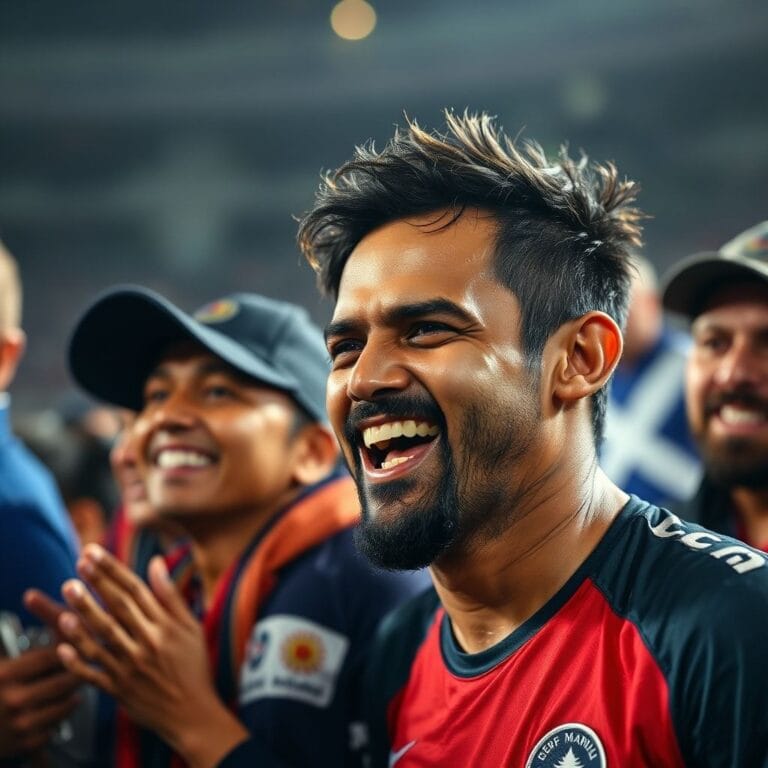
Fans in the stands expressed mixed feelings. Many cheered the six as a highlight of a thrilling T20 night, yet the sight of a bloodied face quickly turned the vibe sour. Social media erupted with calls for protective screens, while purists argued that part of the spectacle is the raw power of modern cricket.
From a supporter’s angle, the match delivered everything – a high total, a nail-biting chase, and a dramatic finish. But the incident the sport’s evolution must be balanced with safety. Until the board introduces concrete measures, the excitement will always come with a side of anxiety for those sitting close to the boundary.
Cricket Desk: Want more on Associate cricket strategy? Check out our Associate cricket strategy Latest News & Stats.