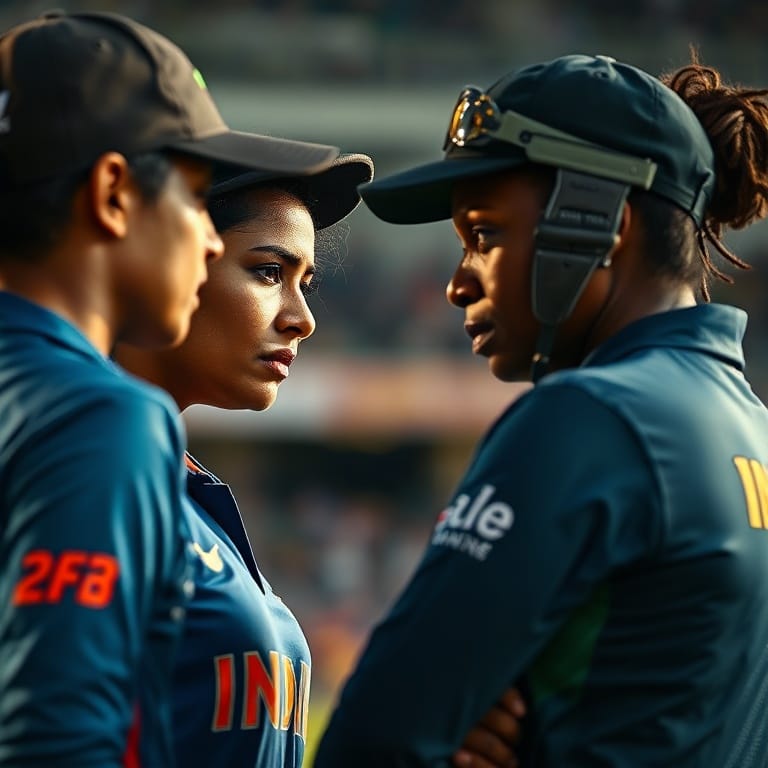
India vs Zimbabwe Women’s Series: A Tactical Showcase Ahead of the Global Stage
India vs Zimbabwe Women’s Series: A Tactical Showcase Ahead of the Global Stage
The Board of Control for Cricket in India has just confirmed a historic first‑ever women’s bilateral series against Zimbabwe, scheduled for October 2026. It marks India’s return to home soil for ODIs after lifting the World Cup trophy, and it offers a rare glimpse into how the champions will blend celebration with tactical experimentation.
From the neon‑lit streets of Raipur to the historic grounds of Baroda, the six‑match tour is more than a showcase—it is a litmus test for a squad that just rewrote the record books. The series also slots into a broader BCCI calendar that sees India A women face Australia A and England A, meaning every player will be juggling form, fitness and the weight of national expectations.
The Stats Behind the Strategy
| Metric | India Women (2025‑26) | Zimbabwe Women (2025‑26) |
|---|---|---|
| Average T20I score (last 10) | 146/6 | 124/7 |
| Average ODI score (last 10) | 292/8 | 255/9 |
| Top run‑scorer (T20I) | Shafali Verma – 212 runs | Modester Mupachinyuka – 98 runs |
| Top wicket‑taker (ODI) | Renuka Singh – 14 wickets | Bowen Maramba – 9 wickets |
| Win % in home conditions (last 2 years) | 82% | 45% |
The numbers tell a clear story: India’s batting depth and bowling firepower dwarf Zimbabwe’s. Yet the margin is not so vast that a surprise result is impossible, especially when you factor in venue quirks.
Tactical Blueprint for Raipur’s T20 Nightlights
Raipur’s newly‑upgraded ground is known for its short boundaries and a pitch that offers generous seam movement under lights. The first three games will likely see India deploy an aggressive top order: Shafali Verma opening with a fearless intent, followed by Smriti Mandhana to stabilize the innings. The plan is to explode to 80‑90 in the powerplay, then accelerate with the middle order. Leg‑spinners such as Pooja Vastrakar will be critical in the middle overs, exploiting the turn that develops as the surface settles.
Zimbabwe, on the other hand, will probably lean on their steady left‑hander, Natsai Mushangwe, to anchor the chase. Their bowlers, especially the swing‑focused Eithne van der Merwe, will try to nip at the edges during the early overs, hoping to keep the Indian run‑rate in check.
Baroda’s 50‑over Canvas
Baroda’s Moti Bagh ground is a classic Indian wicket: a gentle grass cover, a true bounce and a later‑stage slowdown that rewards patience. Here, India’s strategy shifts to a methodical build‑up. The duo of Harmanpreet Kaur and Jemimah Rodrigues will be tasked with pacing the innings, rotating the strike and leaving room for the power hitters—measured, but potent. Renuka Singh’s seam will be the spearhead in the first 20 overs, aiming to exploit any early movement.
Zimbabwe will try to counter by playing the slower lane, using their all‑rounder, Tasmeen Saleem, to steady the middle order. Their seam attack, led by Prisca Mhlanga, will test India’s top order on the new ball, hoping to force a wobble before the batters settle.
Player Mindsets and Role Evolution
For Shafali, the series is a chance to cement her status as the go‑to finisher in the Indian setup. She has spoken about wanting to play “the biggest innings of her life” in front of a home crowd, which adds a layer of pressure but also a surge of confidence.
Smriti Mandhana, fresh from a double‑hundred in the World Cup final, will be looking to blend aggression with responsibility—she knows that a slump in the middle overs can swing momentum. Her experience in English conditions will help her read the extra bounce at Baroda.
Renuka Singh, the emerging fast‑bowling star, will treat the series as a personal audit. Her recent haul of 14 ODI wickets has put her on the radar for the Women’s Premier League, and a match‑winning spell in Baroda could seal a franchise contract.
On the Zimbabwe side, captain Mary-Anne Musinga will need to juggle the dual role of motivator and tactician. Keeping her bowlers disciplined under the floodlights in Raipur could be the difference between a close contest and a one‑sided affair.
Impact on the Global Calendar
India’s home ODI series is the first major bilateral event after the 2025 World Cup victory, and it will serve as a benchmark for the rest of the world’s contenders. A dominant performance will reinforce the perception that India is the new standard‑bearer in women’s white‑ball cricket.
For Zimbabwe, the series is a rare opportunity to measure themselves against the world champions on foreign soil. A credible performance—say, keeping the chase within 15 runs—could boost their ICC ranking and provide leverage for future bilateral deals.
What Comes Next?
After the six matches, the Indian side will turn its attention to the upcoming Women’s Asia Cup in early 2027, using lessons from Raipur and Baroda to fine‑tune their combinations. The A‑team fixtures against Australia A and England A, scheduled for September, will act as a talent pipeline, feeding fresh faces into the senior squad.
For the fans, the series promises a blend of fireworks and field‑level drama. Ticket sales for the Raipur night games have already topped expectations, indicating a hunger for high‑octane cricket in Tier‑2 cities. The emotional resonance of watching world champions play at home, coupled with the novelty of a new opponent, will likely create a lasting memory for both players and supporters.
the India‑Zimbabwe series is a micro‑cosm of women’s cricket’s growing ambition: traditions being challenged, new rivalries forming, and a stage set for the next generation to shine.