India A vs Sri Lanka A: Gaikwad’s Century Overshadows Run-Out Controversy in Dambulla
India A vs Sri Lanka A: Gaikwad’s Century Overshadows Run-Out Controversy in Dambulla
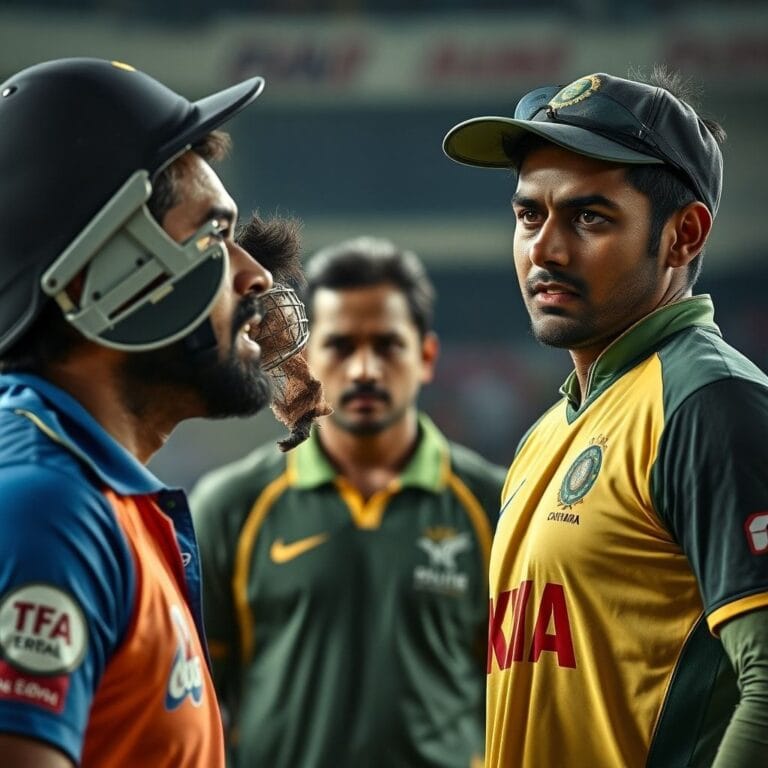
India A’s opening clash against Sri Lanka A in Dambulla turned into a talking point after a bizarre run‑out involving Priyansh Arya and Ruturaj Gaikwad. The incident not only highlighted the pressures of a low‑scoring start but also sparked a debate about communication and split‑second decision‑making in modern limited‑overs cricket.
Match Context and Early Drama
The tri‑nation series, featuring India A, Sri Lanka A and a third side, serves as a proving ground for players on the cusp of senior selection. India A won the toss and chose to bat, a decision that made sense on Dambulla’s flat, hard surface which generally rewards batters who can rotate strike early. Yet the innings began shakily. Openers struggled against the new‑ball swing of Ravindu Fernando, and early wickets left the team at 45/3.
Vaibhav Suryavanshi, the IPL 2026 sensation, could not convert a promising start and fell for 14. The loss of early momentum forced the middle order to adopt a cautious approach while still keeping the scoreboard ticking.
Tactical Moves and the Gaikwad‑Arya Partnership
Ruturaj Gaikwad, promoted to open the middle order, anchored the innings with a controlled aggression. His 101 off 114 balls mixed selective boundaries with a high proportion of singles, a pattern that suits Dambulla’s quick outfield. Tilak Varma’s steady 60 complemented Gaikwad, allowing the side to rebuild the innings after the top‑order collapse.
Priyansh Arya entered the crease at 110/4 and immediately found himself in a running partnership with Gaikwad. The pair’s communication appeared solid until the 13th over when Gaikwad, after a powerful six, called for a second run. Arya’s hesitation created a classic split‑second dilemma: either accept the call and risk a run‑out or abandon the run and give Gaikwad a free single.
Gaikwad’s instinct was to sprint for the striker’s end, while Arya scrambled back to the non‑striker’s crease. Both converged on the same end, and Sri Lanka A’s keeper Niroshan Dickwella collected the throw and dislodged the bails. A replay showed Arya’s bat trapped under Dickwella’s foot, suggesting a marginal but decisive interference.
The Stats Behind the Strategy
| Player | Runs | Balls | SR | Boundaries | Partnership (runs) | Dismissal |
|---|---|---|---|---|---|---|
| Ruturaj Gaikwad | 101 | 114 | 88.6 | 12 fours, 2 sixes | 135 (with Varma) | Run‑out (Arya) |
| Priyansh Arya | 28* | 22 | 127.3 | 3 fours | 35 (with Gaikwad) | Run‑out |
| Tilak Varma (c) | 60 | 97 | 61.9 | 5 fours, 1 six | 135 (with Gaikwad) | Bowled |
The numbers tell a clear story. Gaikwad’s strike rate above 88 allowed him to pace the innings without taking undue risks. Arya’s 127 strike rate after the partnership shows he was set to accelerate, making his dismissal all the more costly. The 135‑run stand between Gaikwad and Varma shifted the momentum, but the run‑out broke the flow just as the side was gearing up for a final surge.
Player Roles, Mindset, and Venue Nuances
Dambulla’s pitch is known for its consistent bounce and a surface that offers little turn early on. Fast bowlers like Fernando can extract seam movement, but once the ball settles, the outfield speeds the ball to the boundary. Gaikwad’s game‑plan capitalised on this: he used the swing to keep the ball down, then unleashed his lofted drives when the ball was easy to field.
Arya, a left‑handed top‑order bat, is comfortable on medium‑pace tracks that reward timing. His aggressive approach fits a pitch where mistimed lofts can be punished, but his hesitation on the run‑out suggests nerves when a partnership is on the brink of a rapid finish.
For Sri Lanka A, the conditions favored seamers early and spinners later. Mohamed Shiraz, the leading wicket‑taker with two dismissals, used a disciplined line to keep the batsmen in check.
Tournament Impact and What Lies Ahead
India A’s 277/6 placed them in a strong position heading into the second game. The total is competitive in a series where the average first‑innings score hovers around 240. Losing Arya in a pivotal moment could have swung the momentum back to Sri Lanka A, but Gaikwad’s century ensured a safety net.
Looking ahead, the next match will test the depth of the middle order. If Gaikwad continues to anchor the innings, the team can afford to give younger players like Suryavanshi a longer run at the crease. Sri Lanka A, on the other hand, will aim to tighten the run‑out coordination and perhaps field a more aggressive side‑arm bowler to exploit any early swing.
Fan Perspective and Grounded Opinions
Social media lit up with clips of the run‑out. Fans praised Gaikwad’s intent but lamented the lack of clear signals between the pair. Many argued that a quick verbal cue or a hand‑signal could have prevented the confusion. Some commentators suggested that the batting pair should have exercised a “run‑out safeguard” – a pre‑agreed rule to prioritize the striker’s end when a second run is in doubt.
From a broader view, the incident underscores how modern cricket demands not just skill but crystal‑clear communication. In a format where a single run can define a match, every player’s awareness of the partner’s intentions becomes as vital as the bat swing.
the match delivered a mix of solid batting, a dramatic dismissal, and a glimpse of the tactical nuances that will shape the tri‑nation series. The story of Arya’s run‑out will linger, but Gaikwad’s composed hundred stands out as the headline performance.