Harmanpreet Kaur Provides Update After Shreyanka Patil Suffers Freak Injury
Harmanpreet Kaur Provides Update After Shreyanka Patil Suffers Freak Injury
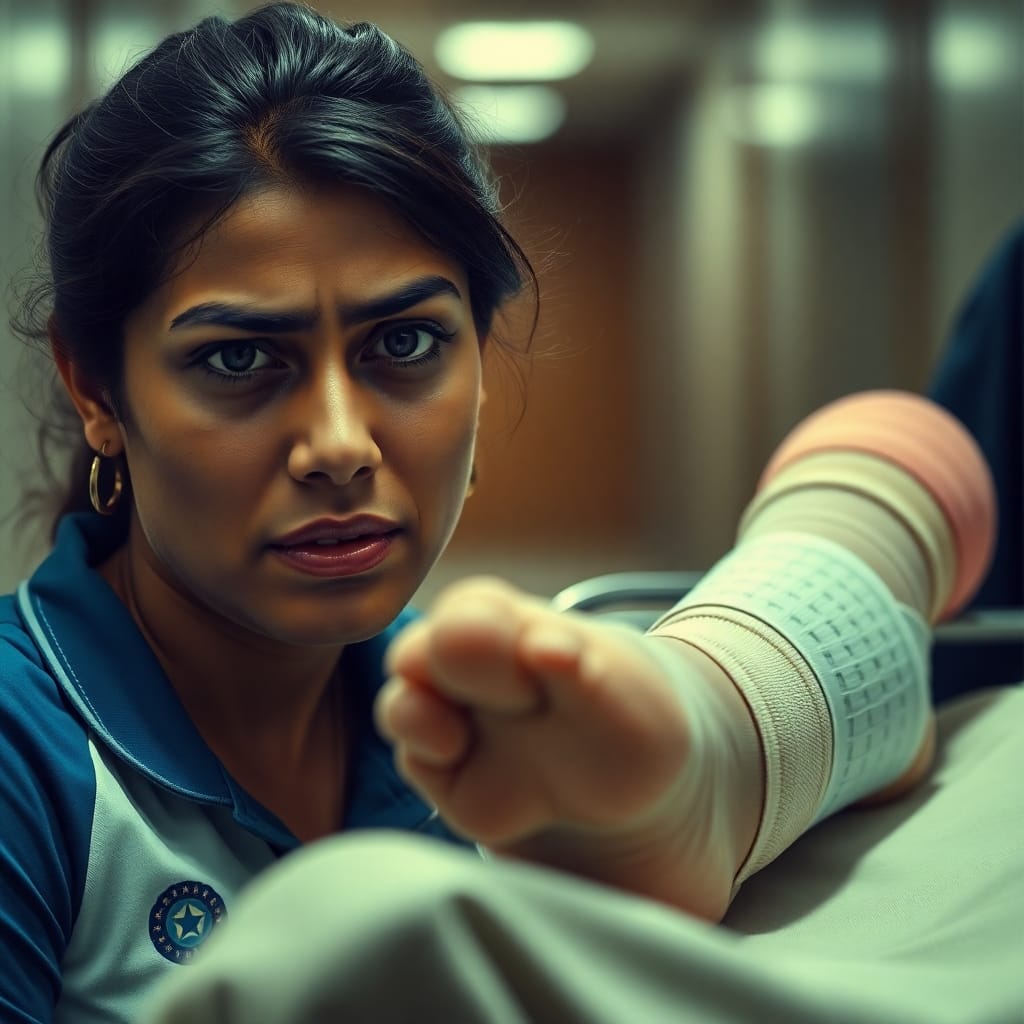
India’s 95-run win over the Netherlands at the Women’s T20 World Cup was a statement, yet the celebration was muted by a freak ankle injury to promising all-rounder Shreyanka Patil. The incident has forced the side to re-think its bowling mix ahead of a crucial South Africa showdown, making the outcome of the scans a key storyline for the tournament.
Patil, who had just been introduced in the powerplay, twisted her right ankle while attempting a soft return at mid-on in the sixth over. The injury came after a swift bowler’s spell that had already put the Dutch under pressure. Her departure on a stretcher added a human drama to an otherwise dominant performance that saw India post 209/5.
Match context and tactical choices
India elected to open with a balanced attack: two seamers for early swing, followed by Patil’s off-spin to exploit the slightly damp surface. The Dutch side, known for a cautious start, were forced into a mistake on the third ball of the innings when a defensive push was intercepted by Patil’s turning delivery, resulting in a crucial wicket. When Patil went down, captain Harmanpreet Kaur turned to Shafali Verma to finish the over, a decision that kept the momentum intact. The team’s field placements remained aggressive, with short-leg and mid-wicket set deep to snare any mis-timed pulls. By the time India’s batting line-up took the crease, the scoreboard already reflected a solid platform.
The Stats Behind the Strategy
| Player | Overs bowled | Econ | Wickets | Avg (runs per wicket) |
|---|---|---|---|---|
| Shreyanka Patil | 2.0 | 3.5 | 2 | 7.0 |
| Radha Yadav | 4.0 | 5.0 | 1 | 28.0 |
| Shafali Verma (bat) | – | – | – | 67 (30 balls) |
The numbers illustrate why Patil’s role was pivotal. Her economy of 3.5 runs per over and a strike rate of one wicket every six balls gave India an edge in the middle overs. Radha Yadav, the likely replacement, posts a higher economy, suggesting a shift in the attack’s rhythm if Patil cannot return.
Player-venue synergy
The group match was played at the Old Trafford ground, where the pitch tends to retain a low-bounce, slightly turn-friendly surface after the first fifteen minutes. Patil’s off-spin, which thrives on a subtle amount of grip, was perfectly suited to the conditions, allowing her to extract turn even on a drying out wicket. By contrast, the upcoming clash with South Africa is slated for the Manchester ground, where the grass cover is thinner and the ball can skid a bit more. In such an environment, left-arm orthodox spinner Radha Yadav may find a slightly easier lane, but her slightly higher economy points to a potential trade-off between control and wicket-taking ability.
Mindset and team dynamics
Patil’s journey back from multiple injuries has been a narrative of resilience. Her willingness to bowl at any stage reflects a mental toughness that the side values highly. The captain’s calm update after the match hinted at the collective belief that the team can absorb the loss without panic.
Fan perspective
Social media lit up with mixed emotions. Fans lauded the win, sharing clips of Smriti Mandhana’s boundary and Shafali’s rapid fire. Simultaneously, a wave of concern for Patil’s health trended, with hashtags asking for speedy recovery and highlighting her comeback story. In stadium forums, the consensus was that India’s depth in spin will be tested, but the squad’s spirit remains unshaken.
Impact on the tournament and what comes next
With the victory, India sits atop Group A, three points clear of the Netherlands and a single point ahead of South Africa. The next match is a de-facto semi-final, meaning any change in the bowling lineup could influence the balance. If the scans confirm Patil’s absence, the coaching staff will likely promote Radha Yadav to the frontline spin role and consider an extra seamer to compensate for the lost middle-over control. Harmanpreet’s batting order may also shift, pulling in a middle-order finisher like Poonam Yadav to bolster depth. Conversely, a quick recovery would restore the original plan: Patil delivering the final 5-10 overs, using her variations to lock down the opposition’s chase. Given her past performances—averaging under 25 in T20 internationals—her inclusion could be the difference between a narrow win and a comfortable one.
Bottom line
India’s dominant display against the Netherlands will be remembered for the big score, but the real storyline now revolves around Patil’s injury and the strategic adjustments it forces. The team’s ability to adapt will be judged in Manchester, where the stakes are higher and the margins thinner. Fans, analysts, and the players themselves are all watching closely, hoping for good news on Patil’s ankle and a seamless transition if a reshuffle becomes necessary.