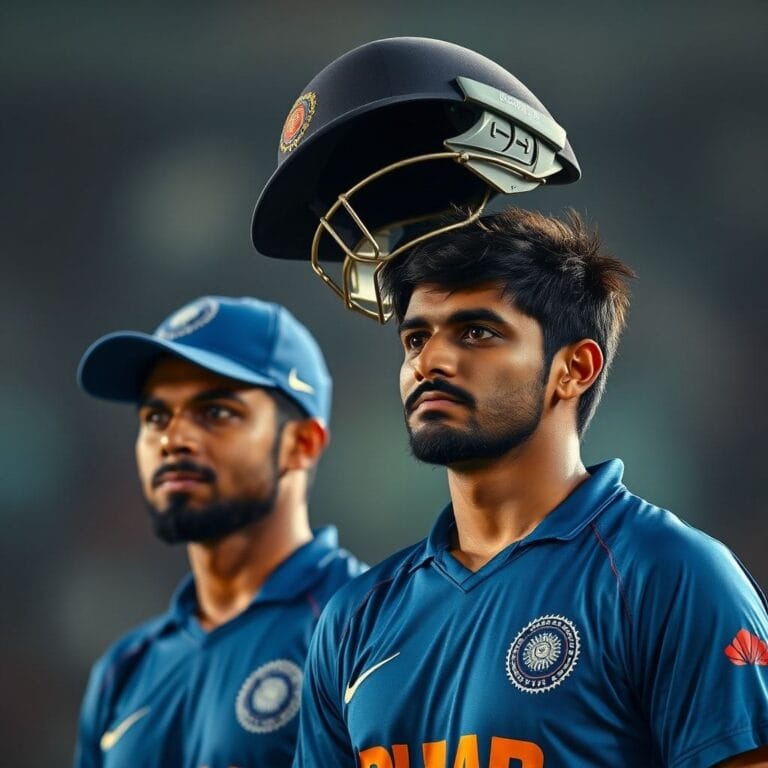

Babar Azam form crisis threatens Pakistan’s T20 World Cup hopes
The Babar Azam Dilemma: Tactical Crossroads for Pakistan’s T20 World Cup Campaign
The controversy swirling around Pakistan’s T20 World Cup campaign has taken a personal turn. Former great Mohammad Yousuf has claimed his resignation as selector was forced after he dared to suggest Babar Azam needed a break, a revelation that throws the team’s selection policy into sharp focus.
Pakistan entered the Super 8 stage with a shaky batting line‑up, Babar having managed just 66 runs from three games. Yousuf’s comments arrive at a moment when every decision is being dissected by pundits, fans, and the PCB alike.
Match and News Context
Pakistan’s group‑stage performance was a mix of tight finishes and nervy collapses. Against Namibia the side scraped home by three wickets, while the clash with Sri Lanka saw them limp to a low‑scoring loss. The Super 8 draw pits them against New Zealand, Sri Lanka again, and England – a trio that demands both stability at the top and firepower in the death overs.
Tactical Analysis and Team Decisions
The core dilemma is clear: stick with a captain whose form has evaporated or reshuffle the batting order in the middle of a world tournament. Yousuf’s suggestion to rest Babar would have meant either promoting a younger prospect like Fakhar Zaman or handing the helm to the steady Mohammad Rizwan. Both options carry risk. Zaman, while explosive, lacks experience against high‑pressure death bowling. Rizwan, on the other hand, offers consistency but brings a different style that could upset the existing partnership dynamics.
In the current set‑up Pakistan has opted to keep Babar at No 3, paired with the left‑handed Hazratullah Zazai at the top. The decision signals faith in the “big‑player‑effect” – the belief that Babar’s reputation can lift the middle order even when runs are scarce. The downside is a potential shift in momentum if early wickets fall, forcing the middle order into a chase that may be beyond their comfort zone.
Player Roles and Mindset
Babar’s role is now as much psychological as technical. He is expected to absorb the pressure, rotate the strike, and create space for the finishers. Rizwan, occupying the No 1 slot, must anchor the innings, seeing a higher proportion of balls from the new ball. Zazai’s mandate is to take advantage of the powerplay, using his natural aggression to give the team a solid start.
All‑rounder Shadab Khan remains the linchpin in the middle, tasked with bowling at the death and offering a lower‑order batting option. His ability to swing the ball with the new ball and then hand the reins to the spinners in the middle overs adds flexibility to the captain’s plans.
The Stats Behind the Strategy
| Player | World Cup Avg | Last 10 Innings (All T20s) | Strike Rate |
|---|---|---|---|
| Babar Azam | 23.4 | 15, 18, 9, 0, 22, 12, 7, 6, 10, 8 | 112 |
| Rizwan | 31.7 | 45, 30, 0, 24, 33, 12, 38, 22, 5, 41 | 138 |
| Zazai | 27.1 | 51, 6, 34, 0, 25, 48, 3, 14, 0, 20 | 152 |
The numbers reveal a stark contrast: Rizwan’s average and strike rate sit comfortably above the tournament median, while Babar’s recent output has slipped below his career norm. Zazai, despite a high strike rate, has shown inconsistency, making the decision to keep him at No 2 a gamble.
Venue‑Based Player‑Pitch Linkage
Pakistan’s Super 8 matches will be played at the Nassau County International Cricket Centre in New York, a venue known for its medium‑pace swing and a true bounce that rewards players with a compact back‑foot technique. Babar’s recent struggles have been linked to an over‑reliance on a wristy flick that works well on slower, low‑bounce tracks like Colombo but falters on the steeper bounce of New York.
Rizwan, whose footwork against the moving ball is textbook, appears better suited to the conditions. Shadab’s ability to vary length on a seam‑friendly pitch could also be a decisive factor.
Tournament Impact and What Comes Next
If Pakistan fails to post competitive totals in the first two Super 8 games, the pressure on Babar will skyrocket. The PCB may be forced to make a late‑stage change, possibly benching Babar for a fresh face or promoting a hard‑hitting all‑rounder like Mohammad Wasim Jr. Such a move would quiet Yousuf’s criticism but could destabilise the dressing room during a critical phase.
The next match against New Zealand will serve as a litmus test. A respectable total will validate the current selection policy; a collapse will reignite calls for a radical overhaul, possibly vindicating Yousuf’s earlier stance.
Fan Perspective and Grounded Opinions
Pakistani fans are divided. On social media many defend Babar, citing his past heroics and the belief that a slump is a temporary phase. Others echo Yousuf’s frustration, pointing to the lack of concrete skill work and the over‑reliance on “mindset” narratives that ignore the technical rot evident in his bat swing.
Stadium crowds, though limited due to venue restrictions, have shown mixed chants – some rallying behind the captain, others calling for “new blood”. The growing rift between the old guard and the current management is palpable, and whatever decision the PCB makes will be judged not just on results but on the narrative of respect for cricketing wisdom.
Cricket Desk: Want more on Associate cricket strategy? Check out our Associate cricket strategy Latest News & Stats.