Virat Kohli vs Manpreet Singh: The Cross-Sport Fitness Showdown That’s Got India Talking
Virat Kohli vs Manpreet Singh: The Cross-Sport Fitness Showdown That’s Got India Talking
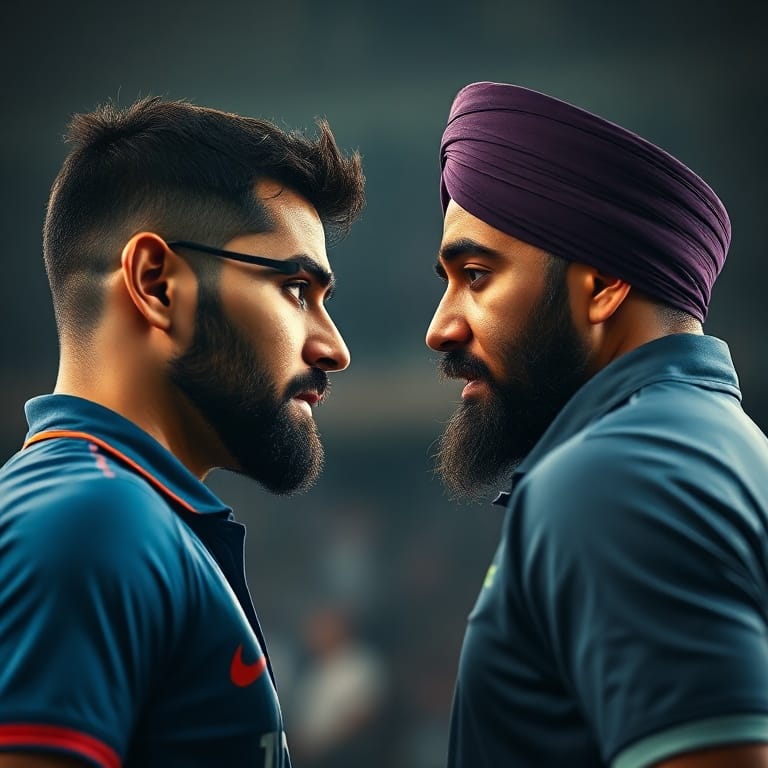
Virat Kohli’s candid praise for Indian hockey’s conditioning sparked a cross‑sport challenge that has fans buzzing. Former hockey captain Manpreet Singh has openly invited the RCB squad to a Yo‑Yo endurance face‑off, turning routine fitness talk into a headline‑grabbing showdown.
The Stats Behind the Strategy
| Metric | Indian Hockey (Avg.) | IPL Players (Avg.) | RCB Specific |
|---|---|---|---|
| Yo‑Yo IRL (Level) | 20.5 | 18.0 | Virat Kohli – 18.2 |
| 30‑m sprint (seconds) | 3.90 | 4.10 | Faf du Plessis – 4.05 |
| Repeated sprint ability (m/min) | 295 | 260 | AB de Villiers – 270 |
The numbers tell a clear story: hockey’s aerobic base outpaces cricket’s burst‑oriented profile. For a sport that demands near‑continuous high‑intensity effort, a Yo‑Yo level above 20 is considered elite, while top cricketers sit just shy of that mark. The gap is the very reason Manpreet sees an advantage in a pure endurance duel.
Tactical Angle – Why a Yo‑Yo Test?
Choosing the Yo‑Yo test isn’t random. It mirrors the repeated sprint pattern hockey players endure during a 60‑minute match – quick bursts, brief recoveries, and a relentless cardio load. Cricket, especially in the IPL, is built around explosive power: a 150 km/h delivery, a 30‑meter sprint for a run‑out, or a sudden fielding burst. The Yo‑Yo isolates cardiovascular stamina, stripping away skill variables and letting raw fitness speak.
RCB’s coaching staff, led by Australian mentor Sanjay Bangar, knows the team’s strength lies in agility and quick‑fire fielding drills. If they accept the challenge, they’ll likely adapt their regimen: longer high‑intensity interval sessions, more shuttle runs, and targeted lactate‑threshold work. In contrast, Indian hockey’s conditioning program, overseen by former Olympian Dhanraj Pillay, already incorporates such elements daily, making a head‑to‑head test feel almost routine for them.
Player Mindset – From Cricket Pads to Hockey Turf
Virat Kohli’s honesty about fitness gaps reveals a humility that fuels his competitive fire. He’s spoken before about the mental edge that superior conditioning gives him in long innings, and he’s now willing to expose himself to a sport that lives on a higher cardio ceiling.
Manpreet Singh, meanwhile, carries the swagger of a captain who has led India to a historic Asian Games gold. His confidence isn’t just bravado; it’s backed by a training culture that cycles athletes through 90‑minute “hockey‑specific” cardio blocks, where the coach screams “up‑and‑down” until the lungs burn.
For RCB’s younger guns – say, Devdutt Padikkal and Rajat Patidar – the prospect of sparring with hockey’s elite could be a wake‑up call. Their usual preseason focuses on batting drills and net sessions; a Yo‑Yo showdown forces them to confront a different kind of endurance, potentially reshaping their approach to fielding distances and recovery between overs.
Venue Linkage – How Conditions Shape the Debate
RCB’s home ground, M. Chinnaswamy Stadium in Bengaluru, sits at a modest altitude with a dry, hard surface that favors quick stride work. The pitch itself offers low bounce, pushing fielders to stay light on their feet for rapid catches. Contrast that with the National Hockey Stadium in New Delhi, where the synthetic turf—especially in the humid months—creates a “grip‑and‑slide” scenario, demanding continuous micro‑adjustments. A player like Kohli, accustomed to the firm Bengaluru outfield, would notice the subtle but relentless drag of a hockey turf during a Yo‑Yo test.
Even the climate plays a role. The IPL’s May‑June heat can push core temperatures above 35 °C, whereas hockey’s season often rolls through monsoon humidity. The differing thermal loads mean each athlete’s conditioning program must factor in heat‑dissipation strategies, from ice‑bath protocols for cricketers to on‑field misting for hockey squads.
Tournament Impact – Does a Fitness Duel Change Anything?
If the challenge materialises before the IPL playoffs, the ripple effects could be tangible. A fitter RCB side might see sharper fielding, tighter running between the wickets, and a lower injury rate during the grueling final weeks. For the championship chase, every saved run matters.
From a broader view, the cross‑sport narrative fuels a cultural shift: cricket’s fitness standards could be nudged upward, encouraging franchises to invest in aerobic conditioning rather than solely strength and power. It may also inspire other sports bodies to stage similar exchanges, turning “who’s fitter?” into a recurring spectacle that benefits Indian athletics overall.
Fans’ Take – What the Streets Are Saying
Social media has erupted with memes of Kohli and Manpreet wearing each other’s gear, while fan forums debate whether the RCB squad will accept the gauntlet. Some purists argue that cricket’s skill set is too distinct for a fair comparison, but many young fans relish the idea of a “real‑man” test that pits two national icons against each other.
In the cafés of Bangalore, patrons wager on whether Kohli can beat the hockey captain’s Yo‑Yo score, while in Delhi, the opposite bet circulates. The buzz has turned a training remark into a cultural moment, reinforcing the belief that Indian athletes can learn from each other’s disciplines.
What Comes Next?
Should the two camps agree, we’ll likely see a joint‑training session streamed live, turning a private fitness test into a public spectacle. The event could set a template for future collaborations – perhaps a T20 batsman versus a sprint‑king from athletics, or a footballer taking on a wicket‑keeper in agility drills.
Regardless of the outcome, the dialogue sparked by Kohli’s honesty and Manpreet’s challenge will linger. It reminds us that elite sport is more than technique; it’s about relentless physical preparation, and the margins between victory and defeat are often measured in milliseconds of breath.