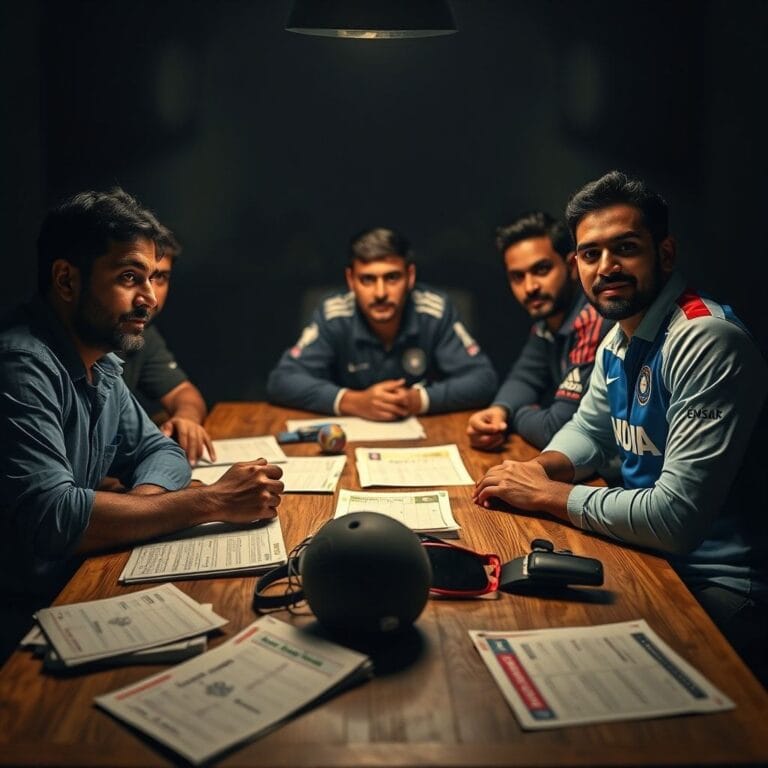
The Rising Storm: Vaibhav Suryavanshi Incident Sparks Debate
The Rising Storm: Vaibhav Suryavanshi Incident Sparks Debate
The recent India A versus Sri Lanka A clash in Dambulla turned into a headline‑grabbing incident involving 15‑year‑old Vaibhav Suryavanshi. Former Test stalwart Sanjay Manjrekar has called for swift disciplinary action, sparking a debate about temperament, talent management and the future of the prodigy.
What unfolded on the field
India A entered the match with a fresh‑eyed opener in Suryavanshi, fresh from an eye‑popping IPL season where he lit up the scoreboard at a strike rate above 230. The Dambulla pitch, a dry surface that tends to reward patience more than raw power, proved a stark contrast to the hard, flat arenas of the IPL. After a pulsating 20‑over finish that forced a Super Over, Sri Lanka A clinched the win.
Temperatures rose in the dugout when Sri Lanka’s Vishen Halambage crossed the crease after the final ball and launched a volley of sledging at Suryavanshi and his teammate Suryansh Shedge. Halambage’s line – “Go home, this is not the IPL” – hit a nerve. The teenage left‑hander, already feeling the pressure of low scores in the series (14, 44, 21, 38), pushed back, physically shoving Halambage before Sri Lanka veteran Niroshan Dickwella intervened.
Why the incident matters
Beyond the immediate drama, the episode highlights two key dilemmas for Indian cricket. First, how to shield a talent who has already broken age barriers, yet shows signs of technical fragility on slower tracks. Second, the need for a clear disciplinary framework that balances mentorship with accountability.
Manjrekar’s tweet – a blunt demand to omit Suryavanshi from the upcoming Afghanistan A game – reflects a sentiment that talent alone cannot shield a player from the consequences of on‑field misconduct. For a cricket board that has previously handled prodigious talents with a mix of leniency and hard‑nosed guidance, the decision will set a precedent.
Tactical choices and team balance
India A’s management faced a crossroads after the altercation. The side could either retain the youngster, hoping his raw aggression translates into leadership, or bench him to send a message. From a tactical view, Suryavanshi’s aggressive approach – swinging hard on the off‑side and looking to dominate the powerplay – is a double‑edged sword on a pitch that offers limited bounce and requires a measured shot selection.
Removing him would open the top order slot for a more grounded player, perhaps a right‑handed opener accustomed to grinding runs on slower surfaces. This could stabilize the innings, especially against Afghanistan A’s swing‑friendly attack, which relies heavily on early wickets.
Player mindset and technical knot
Suryavanshi’s recent scores reveal a player still searching for an anchor. The transition from IPL’s flat decks to Dambulla’s abrasive surface exposed a weakness outside the off‑stump – a gap that Afghanistan’s seamers exploited with short, disciplined length. The mental strain of not replicating his IPL heroics, coupled with media scrutiny, likely amplified his reaction to Halambage’s taunts.
For the teenager, the lesson is twofold: temper his instinct to confront and refine his technique to cope with variable bounce. A measured approach – focusing on leaving balls outside the off‑stump and rotating strike – could rebuild confidence while preserving his natural aggression.
The Stats Behind the Strategy
| Player | Matches (Tri‑Nation) | Runs | Average | Strike Rate | Venue (Dambulla) Avg. |
|---|---|---|---|---|---|
| Vaibhav Suryavanshi | 4 | 117 | 29.25 | 135 | 27.3 |
| Vishen Halambage | 4 | 89 | 22.25 | 112 | 31.1 |
At Dambulla, the average score per innings hovers around 240, underscoring the need for partnerships rather than flash innings. Suryavanshi’s strike rate, still respectable, drops sharply when his dismissals come from short balls – a pattern visible in the 38‑run cameo where a mistimed pull ended his stay.
Impact on the tournament and what follows
The series serves as a platform for fringe players to stake a claim for senior honors. A suspension or benching of Suryavanshi could open a door for another emerging batsman, potentially reshaping India A’s batting order for the Afghanistan and Ireland fixtures.
If the board opts for a warning instead of a ban, the message remains that aggression must be channeled responsibly. The upcoming matches will test whether the young left‑hander can recalibrate his mindset under scrutiny.
Fans’ take and the bigger picture
Supporters are divided. Some argue that a prodigy deserves protection, fearing that a harsh penalty could stall his growth. Others feel that unchecked behaviour erodes the spirit of the game and sets a dangerous example for younger fans.
From a fan’s perspective, the drama adds a human element to an otherwise statistics‑driven narrative. It reminds us that behind every boundary lies a player wrestling with expectation, pressure and personal growth.
Ultimately, the path chosen by the Indian Board will reflect its philosophy: nurture brilliance while instilling discipline. For Suryavanshi, the next few months will be decisive – not just for his technique, but for the character he fashions in the public eye.