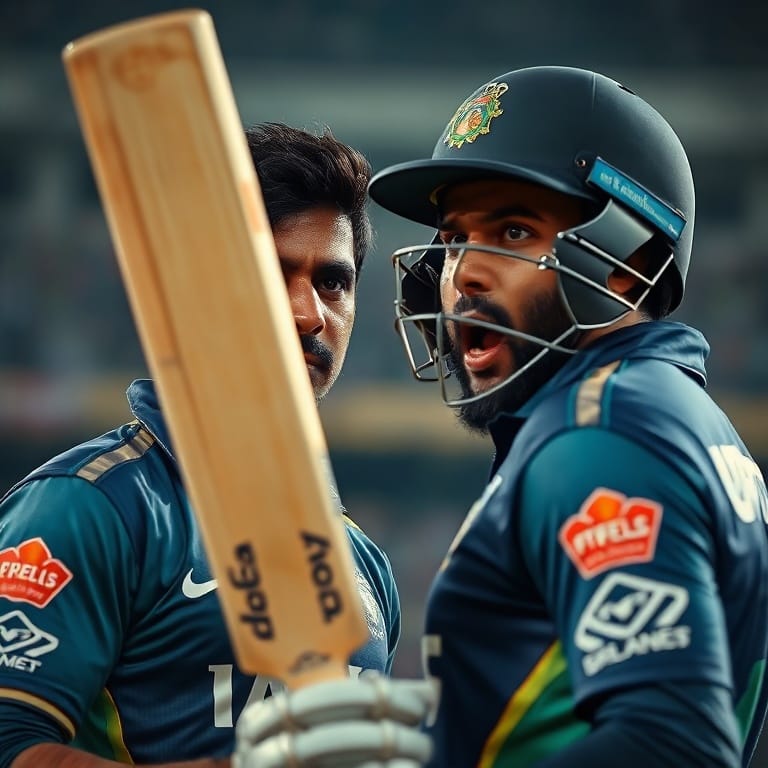
Sachin Tendulkar’s Bold IPL Rule Change Proposals That Could Reshape the Game
Sachin Tendulkar’s Bold IPL Rule Change Proposals That Could Reshape the Game
The cricket world is buzzing because Sachin Tendulkar, still revered as the Master Blaster, has stepped into the IPL rule-making arena. His call to rebalance bat and ball matters for every franchise, every bowler, and every fan who watches scores soar beyond 250 runs a game.
Batting fireworks have turned the IPL into a high-octane spectacle, but the pendulum seems to have swung too far. Tendulkar’s proposals – dropping the Impact Player, reshaping the powerplay and giving a strike bowler a sixth over – could reshape team strategies overnight.
The Stats Behind the Strategy
| Venue | Average Total 2024-26 (Runs) | Avg First-Innings Score | Avg 4th-Innings Chase Success % |
|---|---|---|---|
| Chennai (MA Chidambaram Stadium) | 222 | 112 | 38 |
| Mumbai (Wankhede Stadium) | 237 | 124 | 42 |
| Kolkata (Eden Gardens) | 208 | 103 | 35 |
| Hyderabad (Rajiv Gandhi International) | 244 | 129 | 45 |
The numbers tell a clear story: venues with dry, hard surfaces like Hyderabad and Mumbai routinely push totals past 240, while chase success rates hover below 45%. The extra batsman granted by the Impact Player rule has inflated first-innings scores, making the later powerplay overs a defensive nightmare for bowlers.
Why the Impact Player is a Bowler’s nightmare
Introduced in 2023, the Impact Player lets a side replace any member of the original XI at any point. In practice, teams have used it to bring in a hard-hitting specialist after the first six overs, effectively adding a seventh batter to the order. The result is a longer, heavier top order that forces bowlers to deliver at the death with less cushion.
Take the 2026 eliminator where a franchise swapped a seam bowler for a power-hitting all-rounder at 12.2 overs. The new batter struck a six off the very next ball, turning a manageable 117/3 into 150/3 within three overs. The opposition never recovered. Such scenarios highlight why Tendulkar argues the rule tilts the balance permanently toward the batting side.
Redesigning the powerplay – a tactical antidote
Splitting the mandatory six-over powerplay into a four-over “batters’ powerplay” and two flexible overs could give fielding captains a genuine weapon. By allowing an extra fielder outside the 30-yard circle during the deferred overs, teams could set tighter inner-circle traps, especially on slower tracks like Colombo’s tire-track surface.
Captains who excel at reading the game – Shubman Gill for India or Rashid Khan for Afghanistan – would gain a lever to disrupt a batting surge. The ability to hold back two powerplay overs and unleash them when a key bowler is fresh could shift momentum dramatically.
Extra over for the strike bowler – the missing piece
Current IPL rules cap every bowler at four overs, regardless of skill. The proposal to allow one bowler a fifth over acknowledges the modern reality where a single death-over specialist can change the outcome. Think of Rashid Khan’s lethal yorkers or Ishant Sharma’s reverse swing – an extra six balls could turn a 30-run over into a match-winning spell.
The extra over would not be indiscriminate. It would be a strategic decision made by the captain at the toss, signaled on the third over of the innings, ensuring both sides know the condition in advance.
Player mindsets at play
For a batsman, knowing there is a safety net of a fifth bowler or a flexible powerplay gives confidence to take calculated risks. For bowlers, the prospect of an extra over is an incentive to maintain intensity, knowing they could be called upon for a clutch spell.
All-rounders, once the linchpin of the side, might see their role shift. Instead of being a backup batting option, they could become the “impact bowler” who delivers that crucial fifth over. Players like Hardik Pandya, who already toggle between bat and ball, would find their value redefined in a system that rewards versatility in a more nuanced way.
What this means for the tournament
If the IPL adopts any of Tendulkar’s suggestions, we could witness a dip in the frequency of 250-plus totals, bringing chase percentages back toward 50%. Teams would need to invest more in quality seamers and craftier death-over plans. The draft market might see a surge in specialist bowlers who can shoulder an additional over without losing pace or accuracy.
The shift would also alter the viewing experience. Fans who love high-scoring thrillers might miss some fireworks, but the added tactical chessboard could attract a different audience segment that enjoys the cat-and-mouse battle between bat and ball.
Fan perspective – love the runs, crave the drama
In stadiums across India, chants for “more sixes” echo loudly, yet many long-time followers voice concern that the game is losing its competitive edge. Social media threads are split: one camp celebrates the era of constant boundary rain, the other fears that bowlers have become merely footnote players.
From a fan’s seat, the idea of a captain strategically pulling a delayed powerplay feels like a fresh subplot to a familiar drama. It adds a pause, a breath, where the crowd can hold its collective heartbeat before the next surge.
Ultimately, the conversation sparked by Tendulkar is a sign that the IPL is still evolving. The league’s DNA has always been about innovation, and dialogue among legends, captains and fans keeps the spirit alive.
What comes next?
The BCCI’s rule-making committee will deliberate over the next few months. Expect a public consultation, a few trial runs in the Champions League T20, and perhaps a compromise that trims the Impact Player’s usage rather than erasing it entirely.
Until then, franchises will continue to experiment within the current framework, and fans will keep debating on forums and coffee tables. One thing is certain: the balance between bat and ball will remain the most exciting storyline of the IPL, and wherever it tips, the game will respond.