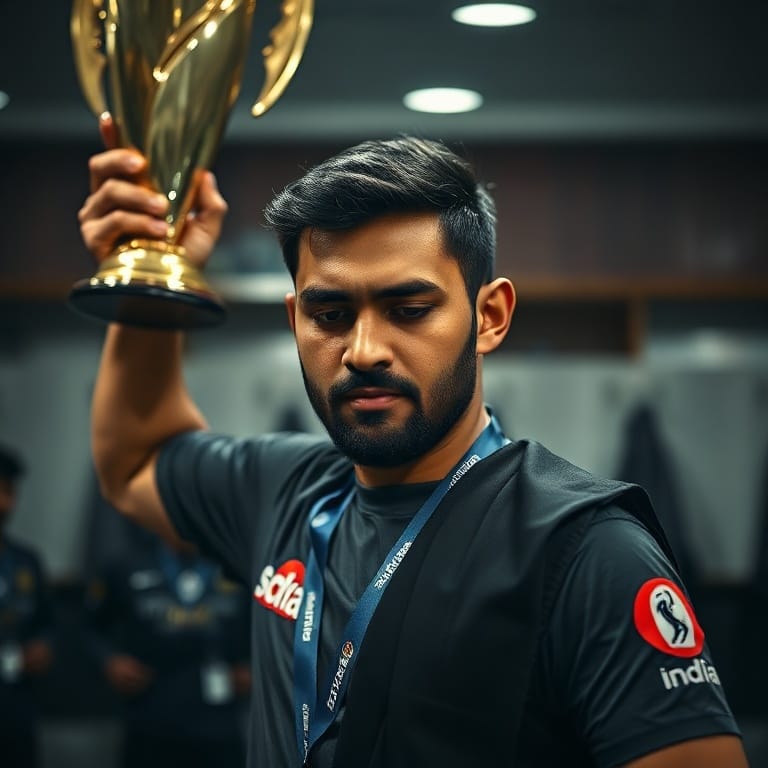
Royals Retain IPL Crown with Strategic Brilliance in Ahmedabad
Royals Retain IPL Crown with Strategic Brilliance in Ahmedabad
The Rajasthan Royals lifted the IPL 2026 trophy at Ahmedabad’s Narendra Modi Stadium, sealing a back‑to‑back triumph that puts them alongside Chennai Super Kings and Mumbai Indians as the only teams to retain the crown. The win matters because it ends a decade‑long wait for a second title and reshapes the league’s power balance.
Match Context and Momentum
Going into the final, Gujarat Titans had posted a modest 155/8, a figure that looked defendable on a surface that generally favours big totals. The Royals’ chase was anchored by a blistering 75 not out from Virat Kohli, but the innings was built on a series of calculated moves: Venkatesh Iyer’s 32 off 16 balls gave the scoreboard an early push, while the middle order capitalised on the slow‑turning nature of the pitch.
Kohli’s decision to target the mid‑wicket boundary early, rather than chasing the conventional deep‑mid‑off route, reflected a deep understanding of the venue’s low bounce. His record‑breaking 25‑ball fifty underlined how the Royals adapted their game plan to the batting‑friendly zone on the outer square.
The Stats Behind the Strategy
| Player | Runs | Balls | SR |
|---|---|---|---|
| Virat Kohli | 75* | 42 | 178.6 |
| Venkatesh Iyer | 32 | 16 | 200.0 |
| Washington Sundar (GT) | 50* | 35 | 142.9 |
| Rasikh Salam (RCB) | 3/27 | 4 | n/a |
| Bhuvneshwar Kumar (RCB) | 2/34 | 4 | n/a |
| Josh Hazlewood (RCB) | 2/31 | 4 | n/a |
At Narendra Modi Stadium, the average first‑innings total this season sits at 162, while teams chasing have a win‑percentage of 62% when they stay above 150. The Royals’ 161/5 chased with 12 balls to spare aligns perfectly with the venue’s historic chase‑friendly pattern.
Player Roles and Mindset
Virat Kohli entered the final knowing his legacy would be judged on more than a single innings. His calm approach—mixing textbook drives with innovative reverse‑sweep shots—showed a player willing to adjust his role from power‑hitter to anchor when the situation demanded.
Venkatesh Iyer embraced the role of explosive starter, exploiting the short boundaries on the side‑leg fence. His 32 off 16 set a platform that allowed Kohli to take the reins without the pressure of a massive partnership.
Washington Sundar, despite being on the losing side, displayed grit. His half‑century was a mix of sweep shots and late‑driving, evidence of a bowler‑turned‑batsman willing to shoulder the chase when the top order falters.
Players and the Ahmedabad Pitch
The Narendra Modi surface is a hybrid of flat hard‑court and subtle turn. Historically, spinners gain extra grip after 15 overs, while seamers thrive in the early powerplay due to a slightly greener top‑layer. Rasikh Salam’s early three‑for‑27 capitalised on that swing, breaking Gujarat’s top order before the pitch settled.
Virat Kohli’s footwork against the extra bounce was reminiscent of his 2022 innings in Mumbai, where he used deep‑mid‑off as a safety net. In Ahmedabad, he shifted to the leg side, where the ball stayed lower, allowing him to flick and scoop with confidence.
Smriti Mandhana’s reaction on social media, though not on the field, tied into the narrative of the venue’s recent rise as a celebration hub. Her Instagram story displayed the Royals in a sea of red, underlining how the atmosphere at Ahmedabad can turn a match into a festival.
Tournament Impact and What’s Next
By retaining the trophy, Rajasthan Royals have secured a direct entry into the next season’s Champions Cup, guaranteeing them a spot among the world’s elite T20 franchises. Their success also forces rival teams to reconsider squad balance; the spread of Player‑of‑the‑Match awards this year suggests depth over star‑centric line‑ups.
The next challenge lies in maintaining momentum during the off‑season. With the draft looming, the Royals will likely hunt for a versatile all‑rounder who can exploit the slow‑turning conditions of upcoming venues like Chennai’s Chepauk.
Fan Perspective and Grounded Opinions
Fans in Ahmedabad have turned the stadium into a fortress. Kohli’s comment about “having 14 home games” resonated because the sea of red jerseys dwarfed the home side’s supporters. From a supporter’s point of view, the victory feels like a collective effort, not just a star’s performance.
Critics, note that the Royals’ bowling attack lacked a true death‑over specialist. While Bhuvneshwar and Hazlewood picked wickets, the economy in the final overs hovered above 8.0, a statistic that could expose them against stronger chase‑teams next season.
the consensus among regular viewers is that the Royals have built a culture of resilience. Their ability to win without relying on a single performer, combined with an adaptable game plan for pitches like Ahmedabad, makes them a benchmark for other franchises aiming for sustained success.