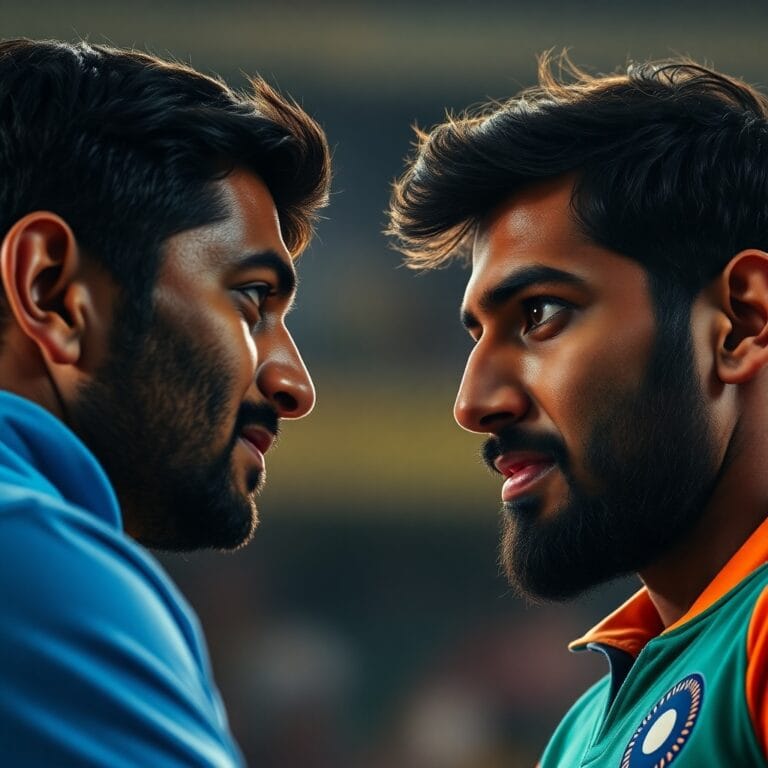
Rashid’s Googly Shatters Rohit’s Innings in Lucknow ODI
Rashid’s Googly Shatters Rohit’s Innings in Lucknow ODI
The second ODI between India and Afghanistan in Lucknow turned into a masterclass of spin, with Rashid Khan’s classic googly dismissing Rohit Sharma just shy of a fifty. The wicket shifted momentum, but the hosts kept the run‑rate ticking, highlighting how a single delivery can redefine a chase.
Match context and tactical overview
Afghanistan won the toss and chose to field, trusting their seamers to exploit the early morning moisture at Ekana. The decision paid off when Mohammad Saleem Safi rattled open‑ers, removing Yashasvi Jaiswal for a first‑ball duck. India’s response was swift; captain Rohit Sharma, traditionally an aggressive starter, took command, mixing drives and lofted shots to push the total past eighty in the powerplay.
Rohit’s innings was built around taking on the new ball, but the turning point arrived in the 14th over when Rashid Khan, operating from the opposite end, dropped his well‑practised googly. The ball spun back sharply, beating Rohit’s back foot and nestling into the stumps. The dismissal highlighted two core ideas: Afghanistan’s reliance on Rashid’s variations and India’s need to back‑up the captain’s aggression with depth in the middle order.
The Stats Behind the Strategy
| Player | Runs | Balls | SR | Key Contribution |
|---|---|---|---|---|
| Rohit Sharma | 48 | 39 | 123.08 | Set platform, 6 fours, 2 sixes |
| Shubman Gill | 34* | 28 | 121.43 | Anchor after Rohit’s exit |
| Ishan Kishan | 29* | 15 | 193.33 | Accelerated post‑50 run‑rate |
| Rashid Khan | 0 | 28 | 0.00 | 3 wickets, including Rohit’s crucial wicket |
Rashid’s three wickets cost India just 42 runs, a sub‑20 economy that kept Afghanistan’s total in reach. The partnership between Gill and Kishan added 112 runs for the third wicket, a clear sign that India’s middle order can absorb a setback and keep the scoreboard moving.
Player roles and mindset at Lucknow
Rohit treated the opening overs like a batting clinic, using the flat Ekana surface to flick the ball on the back foot. His mindset was simple: dominate the pace attack before the spin comes on. When Rashid entered, the captain’s usual confidence wavered; the googly is a delivery he’d faced many times, yet the compressed length and extra turn on the slower parts of the pitch caught him off balance.
Afghanistan’s bowlers adopted a two‑phase plan. Early on, they aimed to hug the seam, exploiting the slight swing offered by the morning breeze. Once the ball settled, Rashid took over, varying flight and pace to force a mis‑read. The plan worked because the pitch at Ekana tends to dry out after the first hour, giving spin a sharper bite.
Shubman Gill’s role shifted from anchor to aggressor after Rohit’s departure. He recognised the need to keep the run‑rate above 5.8 and used soft hands to rotate the strike, leaving Rashid chasing gaps rather than the in‑field. Ishan Kishan, meanwhile, loved the space on the leg side provided by the low‑bounce track, unleashing lofted pulls and drives that stretched the field.
Impact on the series and what lies ahead
With the first ODI already secured by India, the second win broadens the series lead to 2‑0. Afghanistan’s reliance on Rashid’s magic will be tested in the third match, especially if India rotates bowlers or adjusts field placements. The hosts now have the luxury to experiment; a quick‑fire spin duo could be introduced, or the lower order could be given a chance to prove depth.
The upcoming fixtures will also see a shift in pitch behaviour. The Ekana ground tends to become slower as the sun climbs, meaning teams might favour spin‑heavy line‑ups on Day 2. For India, this opens the door to deploying ax‑clad spinners like Axar Patel earlier, while Afghanistan could look to pair Rashid with a left‑arm orthodox to create variation.
Fan perspective and grounded opinion
Supporters in Lucknow were ecstatic when Rohit’s sixes rumbled through the stands, but the collective gasp after the googly reminded everyone that a single ball can swing a narrative. Many in the crowd voiced relief that the middle order recovered swiftly, highlighting confidence in Gill’s technique and Kishan’s flair.
From a broader angle, the series illustrates how emerging cricket nations can challenge traditional powerhouses with tactical nuance. Afghanistan’s spin weaponry is now a talking point, and the fan base is beginning to see them as a genuine threat rather than a side that merely enjoys a few surprise wickets.
Looking ahead, the key for India will be to maintain aggression without losing wickets cheaply. For Afghanistan, diversifying their attack beyond Rashid’s brilliance could make the series more competitive. The next game promises another layer of strategy, and whatever the outcome, the contest has already given fans a showcase of skill, patience, and the occasional cheeky surprise.