Iyer’s Stunning Catch Against Pandya Becomes IPL 2026’s Defining Moment
Iyer’s Stunning Catch Against Pandya Becomes IPL 2026’s Defining Moment
Shreyas Iyer’s spectacular catch against Hardik Pandya turned a routine boundary into a game‑changing moment at the Wankhede Stadium. The drama unfolded in the 18th over of the IPL 2026 clash between Punjab Kings and Mumbai Indians, and it has become the talk of the tournament because a single fielding effort can tilt the balance of a high‑stakes encounter.
The Stats Behind the Strategy
| Metric | Punjab Kings | Mumbai Indians |
|---|---|---|
| Runs after 15 overs | 112 | 134 |
| Wickets lost after 15 overs | 2 | 3 |
| Boundary conversion rate (fours + sixes) in overs 16‑20 | 28% | 19% |
| Runs off the final 5 overs | 84 | 61 |
| Fielding dismissals (catches/run‑outs) after the 10th over | 3 | 1 |
The numbers tell a clear story: Punjab’s surge in the death overs came after they removed Mumbai’s main finisher. Iyer’s catch contributed to a dip in Mumbai’s boundary conversion rate and forced them into a defensive mindset, allowing Punjab to chase the revised target with ease.
Match context and why it mattered
Both sides entered the game with a 4‑2 win‑loss record, making the fixture a potential playoff catalyst. Mumbai, anchored by Quinton de Kock’s blistering century, looked set to post a formidable total above 200. Punjab, on the other hand, relied on a balanced chase that hinged on limiting Mumbai’s late‑over fireworks.
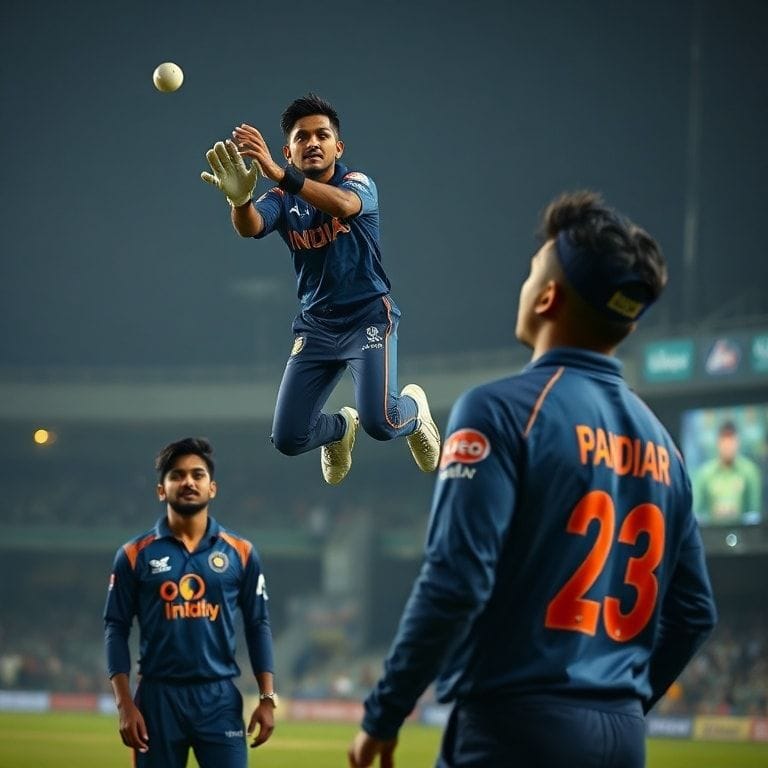
The wicket fell at a crucial juncture. Pandya, who usually turns games in the death with sheer power, was looking to accelerate after a dot‑ball. Marco Jansen’s slower delivery was meant to be a surprise, but the ball drifted high, heading straight for the long‑on fence. Iyer’s decision to sprint full‑tilt from deep mid‑wicket showcased his instinct that the ball was a golden chance to end Mumbai’s momentum.
Tactical analysis and team decisions
Punjab’s captain, Shikhar Dhawan, chose to keep four fielders inside the circle for the 16th‑18th overs, trusting the bowlers to keep the runs tight. When the ball rose, Iyer’s position—roughly 30 metres from the pitch—was a product of that aggressive field placement. Instead of a traditional boundary rider, he became an auxiliary keeper, reading the trajectory like a seasoned outfielder.
When Iyer sensed his momentum carrying him beyond the boundary rope, he made a split‑second choice: rather than let the ball splash down for six, he twisted his body mid‑air, redirected the ball towards long‑off, and let Xavier Bartlett complete the catch. That move illustrated a rare blend of athleticism and cricketing IQ; a typical fielding drill rarely asks a player to anticipate his own foot‑fault and act accordingly.
Player roles and mindset
Iyer, often celebrated for his batting composure, has quietly evolved into a utility fielder. At Wankhede, the pitch offers a hard, fast outfield that rewards precise timing. Iyer’s previous experience on Mumbai’s red soil—where the ball skids and bounces low—gave him confidence to take calculated risks.
For Pandya, the missed opportunity was a mental setback. He thrives on the adrenaline of a six‑run slog, but the catch forced him to reset his approach, leaving only a handful of runs before the innings folded. The psychological impact was evident in the dugout: Rohit Sharma’s frozen stare, Suryakumar Yadav’s clenched jaw, and a stunned Ravi Shastri who could only comment on Iyer’s “superhuman core strength”.
Impact on the tournament and what comes next
Punjab’s seven‑run victory put them firmly in the top‑four conversation. The win also highlighted the importance of fielding depth in a format where a single catch can swing the expected runs by 15‑20. Teams now have a new data point: investing in versatile fielders like Iyer yields returns beyond mere run‑saving.
For Mumbai, the loss is a reminder that a single century does not guarantee a win if the death overs crumble. Their next match against Sunrisers Hyderabad will test whether they can tighten up the field‑placement strategy and keep the bowling unit disciplined under pressure.
Fan perspective and grounded opinions
The social media buzz was immediate. Fans uploaded the clip on Twitter, Instagram, and cricket forums, labeling it “the catch of the season”. While some pundits praised the athleticism, others argued that Punjab’s victory owed more to their lethal batting lineup than to one fielding moment. On the ground, Punjab supporters chanted Iyer’s name, turning the catch into a rallying cry for the rest of the tournament.
In the streets of Mumbai, the reaction was mixed. Loyal MI fans applauded de Kock’s heroics but lamented the loss of Pandya, noting that the team’s middle order needed to become more adaptable when a key finisher is removed. Across the country, cricket enthusiasts used the incident to debate the evolving role of fielding specialists in the IPL’s fast‑paced environment.
What remains clear is that a single moment of brilliance can rewrite a match script, alter a team’s trajectory, and give fans a story to retell weeks later. Iyer’s catch will be replayed wherever cricket is discussed, reminding everyone that the sport’s excitement lives not only in runs but in the split‑second decisions that define a player’s legacy.