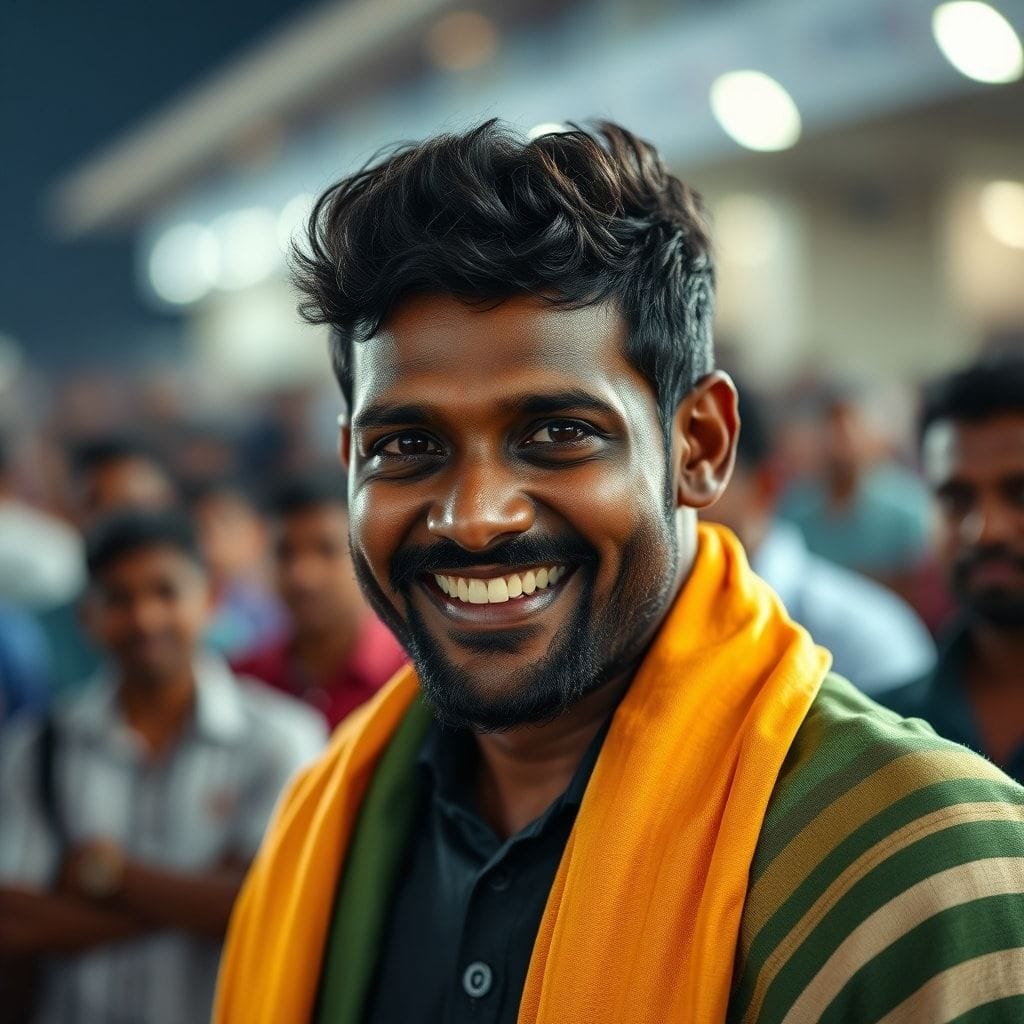
Sanju Samson’s T20 World Cup Heroics Seal India’s Triumph
Sanju Samson: The Architect of India’s T20 World Cup Triumph
Sanju Samson’s triumphant return to Kerala after the 2026 ICC Men’s T20 World Cup has turned heads across the cricketing map. The Kerala hero not only helped India lift the trophy but also walked away with the Player of the Tournament award, sparking a wave of pride that ripples from Vizhinjam to New Delhi.
The Stats Behind the Strategy
| Match | Runs | Strike Rate | Sixes | Venue |
|---|---|---|---|---|
| Super Eight vs West Indies | 97* (50) | 194.0 | 12 | Williams Park, Kingston |
| Semi‑final vs England | 89 (42) | 211.9 | 9 | Wankhede Stadium, Mumbai |
| Final vs New Zealand | 89 (46) | 193.5 | 9 | Narendra Modi Stadium, Ahmedabad |
| Overall Tournament | 321 | 203.2 | 24 | Various |
The numbers tell a clear story: Samson’s ability to accelerate in the death overs turned tight chases into modest targets. At Kingston, the slow Caribbean outfield demanded a blend of power and placement – his 12 sixes showed raw strength. Mumbai’s Wankhede, with its true bounce and short boundaries, allowed Samson to dominate the Lo-pocket, while Ahmedabad’s flat, hard surface rewarded his swing-through timing, delivering a massive 255/5 total.
Tactical Shifts and Team Decisions
India entered the tournament with a conventional top-order anchored by Rohit Sharma and KL Rahul. The early loss against New Zealand exposed a vulnerability: the middle order struggled to finish games when the top order collapsed. Coach Rahul Dravid’s decisive move to recall Samson for the Super Eight was more than a morale boost; it was a calculated gamble to add a left-handed, high-impact finisher who could exploit the power-play restrictions and rotate strike under pressure.
In the West Indies game, the team elected to open the innings with Rohit and Rahul, keeping Samson at No 5. When the required run-rate surged past 10, Samson’s 97* came after the 30-over mark, a rare instance of a finisher anchoring the chase. The partnership with Hardik Pandya (37*) demonstrated a switch-hit tactic, using the right-handed Pandya to pull the field while Samson targeted the leg side, creating a dual-axis on the scoreboard.
The semi-final against England highlighted another strategic tweak: India promoted the all-rounder Shreyas Iyer to No 4, freeing Samson to take No 5 in a chase of 175. On the Wankhede’s short covers, Samson’s aggressive pull and sweep turned the match into a sprint, eroding England’s confidence and allowing India to bowl first with a 10-run advantage.
For the final, Dravid elected to open with Rohit and Shubman Gill, sending Samson to No 4. The decision paid dividends on a flat Ahmedabad pitch where a deep-mid-wicket lofted six could be retuned into a boundary with a simple jog. Samson’s 89 off 46 balls provided a platform for the middle order to unleash a barrage of sixes, culminating in a 255/5 total – the highest ever in a T20 World Cup final.
Player Mindset and Role Evolution
Samson’s own narrative has shifted from “the sporadic hit-man” to a calculated aggressive architect. After a bench stint during the 2024 New Zealand series, he spent weeks visualising each ball as a set of angles and timing cues, a method he credits to scribbles from his mentor Sachin Tendulkar. This mental rehearsal translated into confidence at the crease, evident in his calm composure while chasing 196 against the Windies.
His role expanded beyond batting; his wicket-keeping became a catalyst for quick run-outs. In the final’s fielding climax, Samson’s swift hands produced a direct hit at point, breaking the New Zealand run-chase early and cementing his all-round value.
Tournament Impact and What Lies Ahead
India’s successful defence of the T20 crown has reset expectations for the next two years of the calendar. With Samson now etched in the elite list of Player-of-the-Tournament winners, selectors are likely to cement him as a permanent No 4-5 fixture, even in the upcoming home series against England and the Asian Games qualifier.
For the young cricketers of Kerala, Samson’s story provides a tangible pathway: regional academies receive fresh funding, and the state cricket board has announced a “Sanju Samson Academy” in Vizhinjam, aiming to nurture left-handed power-hitters for the next generation.
Fans’ Take and Grounded Opinions
From the bustling lanes of Kochi to the tea-stalls of Delhi, fans have turned Samson’s airport welcome into a recurring chant. While many celebrate his heroic runs, a vocal minority points out that his inclusion meant sidelining another in-form youngster, Ruturaj Gaikwad. Their argument rests on the belief that India needs depth beyond a single finisher.
Most analysts, argue that the balance achieved – Rohit’s steadying hand, Rahul’s experience, Iyer’s aggression, and Samson’s finishing – is a template that could guide India through the 2028 World Cup cycle. The consensus on social media is clear: Samson’s ascent has lifted the entire team’s confidence, and the nation now expects India to dominate the shorter formats for the foreseeable future.
Cricket Desk: Want more on ICC T20 World Cup 2026? Check out our ICC T20 World Cup 2026 Latest News & Stats.