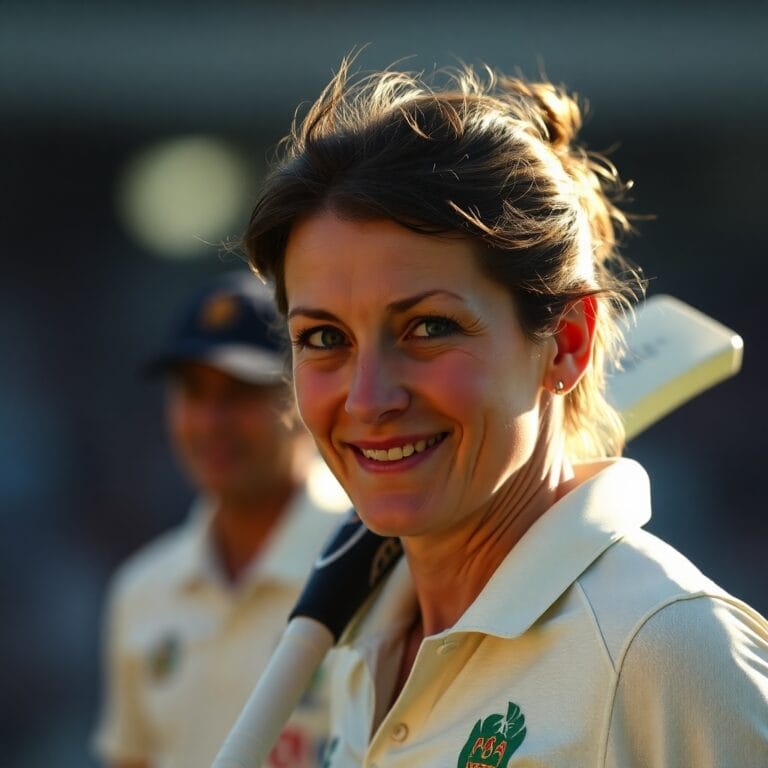
Nat Sciver-Brunt Reflects After England’s Heartbreaking T20 World Cup Final Loss
Nat Sciver-Brunt Reflects After England’s Heartbreaking T20 World Cup Final Loss
Nat Sciver-Brunt opened up about the future of her international career after England’s narrow loss to Australia in the 2026 Women’s T20 World Cup final. The conversation matters because it reflects the crossroads a leading all-rounder faces when a home tournament ends in heartbreak.
The Stats Behind the Strategy
| Player | Runs | Avg | SR | Wickets | Econ |
|---|---|---|---|---|---|
| Nat Sciver-Brunt | 227 | 113.5 | 138.5 | 4 | 5.2 |
| Ashleigh Gardner (AUS) | 190 | 95.0 | 132.0 | 6 | 4.8 |
| Heather Knight (ENG) | 112 | 56.0 | 124.0 | 2 | 6.0 |
The numbers tell a story of consistency. Sciver-Brunt’s average of 113.5 is a direct result of two unbeaten fifties and a solitary duck, while her strike rate of 138.5 kept England’s momentum alive on a pitch that offered a bit of seam at Lord’s. In the final she scored 52 off 38 balls, a knock that would have chased 200 in other conditions, but Australia’s six-wicket partnership erased the advantage.
Match Context and Tactical Choices
The final was staged at Lord’s, a venue known for a slightly lively surface early on, then flattening as the day progresses. England won the toss and elected to bowl, trusting their seam bowlers to exploit the morning-time swing. The decision made sense on paper – Australia’s power-play had shown vulnerability to back-of-the-hand deliveries in previous games.
Australia’s openers, chose a more measured approach, rotating the strike and leaving the ball outside off. England’s bowlers, led by Katherine Brunt, kept the line tight but could not generate enough movement to force early wickets. The pivotal moment arrived when the pitch began to settle, reducing the seam for the second half of the innings. England’s captain brought on her own medium-pace change-over, a move that only yielded one wicket and conceded 18 runs in two overs.
Batting first, England posted 150/4, a total that would have been competitive on a slower surface. The top order, anchored by Sciver-Brunt and Knight, displayed a blend of aggression and restraint. The decision to hold back the lower order until the last five overs limited England’s ability to accelerate, a point that will haunt the side in post-match analysis.
Player Roles, Mindset, and the Home-Soil Factor
Sciver-Brunt’s role as captain and all-rounder required her to balance aggression with calmness. Her half-century in the final was a statement of intent – she wanted to give the crowd something to cheer for while knowing the pressure of a home final. The emotional embrace with her wife Katherine and son Theo after the match underlined the personal stakes involved.
Australia’s captain, Alyssa Healy, approached the chase with a clear plan: steady accumulation followed by a late-innings surge. Their bowlers, especially Megan Schutt, used the subtle turn on the Lord’s square leg, restricting England’s scoring in the death overs.
Tournament Impact and What Comes Next
England’s run to the final demonstrates a resurgence after a difficult period. The semi-final knock of 75 from Sciver-Brunt against South Africa showed how vital her innings are in high-pressure situations. With the next World Cup likely three years away, the team will regroup, assess the balance between spin and seam, and consider how to provide a platform for emerging talents like Alice Capsey.
Sciver-Brunt’s statement about taking things “day by day” hints at a cautious approach to workload management. Her calf issue earlier in the tournament reminded the staff that player health will dominate squad selection discussions leading up to the 2027 Asian Games and the upcoming tour of New Zealand.
Fan Perspective and Grounded Opinions
English fans left Lord’s feeling a mixture of pride and disappointment. Social media buzzed with admiration for Sciver-Brunt’s bravery, while also questioning the decision to keep the top order intact for most of the innings. Many supporters voiced a desire to see a more aggressive batting order, perhaps promoting a hard-hitting youngster to open.
Australian fans celebrated a well-executed chase, pointing out how their bowlers adapted to the changing conditions faster. The general consensus across both camps is that the final was a showcase of modern women’s T20 cricket – skill, strategy, and emotion in equal measure.
Looking ahead, England must decide whether to back Sciver-Brunt as a long-term captain or explore a shared-leadership model. The next series against India will provide a testing ground for any new approach. For the fans, the takeaway is clear: the heart of English women’s cricket beats strong, even if the trophy slipped away this time.