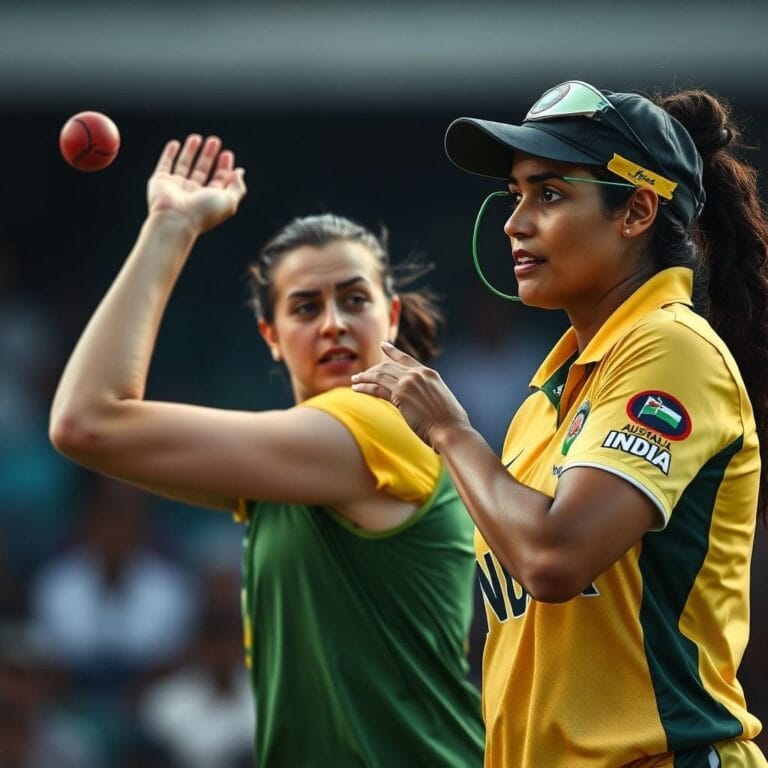
England Women vs India Women, 3rd T20I: Tactical Decider in Taunton
England Women vs India Women, 3rd T20I: Tactical Decider in Taunton
The third T20I between England Women and India Women in Taunton is a winner‑takes‑all showdown, with the series dead‑locked at 1‑1. Both sides have tasted victory on English soil, and the outcome will shape confidence heading into the upcoming Women’s T20 World Cup.
The Stats Behind the Strategy
| Player | Avg (T20Is) | SR | Recent Score vs Eng |
|---|---|---|---|
| Smriti Mandhana | 31.2 | 132 | 44 (vs Eng, 2022) |
| Shafali Verma | 28.7 | 138 | 36* (vs Eng, 2021) |
| Jemimah Rodrigues | 26.4 | 124 | 58 (vs Eng, 2023) |
| Alice Capsey | 23.9 | 127 | 41 (vs Ind, 2022) |
| Freya Kemp | 20.1 | 115 | 29 (vs Ind, 2023) |
The numbers reveal a clear pattern: India’s top order thrives on a high strike‑rate, while England’s middle order provides depth and stability. The bounce at Taunton favours batters who can meet the ball on the rise, which explains why both teams have stacked aggressive openers.
Match context and why it matters
Taunton’s Cooper Associates County Ground is known for its short boundaries and true bounce, especially under the evening lights. The surface usually offers a little seam and swing early on, then flattens out, giving spinners a few extra yards of turn in the middle overs. Winning the toss and electing to bowl first has historically been the winning move here, as teams can set a target and let the lights do the work.
For England, the series‑leveling win in Gloucestershire gave them a psychological edge on home soil. For India, the dominant 38‑run victory in Chelmsford reminded the hosts that their power‑play firepower can dismantle any bowling plan. The decider will test who can adapt faster to the twilight conditions.
Tactical analysis and team decisions
England’s game plan: Deploy the seam attack early with Lauren Bell and Charlie Dean, both of whom can swing the new ball in the damp June air. The aim is to restrict India to 50‑60 in the powerplay, then let the deep batting line‑up – Capsey, Bouchier, and Wyatt‑Hodge – accelerate in the middle overs. Freya Kemp offers a handy all‑round option; a quick 30‑plus and a couple of overs of medium‑pace could tip the scales.
India’s counter‑strategy: Open with Mandhana and Verma to exploit the short boundaries and the bounce. Both batters favor a lofted approach, turning the powerplay into a scoring sprint. In the middle, the spin duo – Deepti Sharma and Radha Yadav – will look for grip as the pitch settles. Harmanpreet Kaur’s experience as a finisher means she will stay back, waiting for a platform before unleashing her own spin variations against England’s lower‑order.
Both captains know that field placements will be fluid. England’s Charlotte Dean is likely to rotate bowlers every two overs, keeping the Indian batters guessing. India’s Richa Ghosh, as keeper, will be ready to whip quick reflex catches off the edges generated by the seam swing.
Player roles and mindset
Smriti Mandhana – The Indian opener thrives on timing. At Taunton she will treat the short cover drives as a weapon, trusting the true bounce to carry the ball to the fence.
Shafali Verma – Her explosive power makes her the perfect partner for Mandhana. A quick 30 in the first five overs can put England on the back foot and force a defensive field.
Jemimah Rodrigues – Typically an anchor, Rodrigues will adapt her role today. If the top order falters, she will shift into a strike‑rate role, taking advantage of the short boundaries.
Alice Capsey – A dynamic middle‑order player, Capsey’s game is built on improvisation. She will look to dominate the 11‑15 over window, turning a modest start into a chase of 170‑180.
Freya Kemp – Kemp’s all‑rounder status gives England flexibility. A quick cameo in the lower order can boost the run rate, while her medium‑pace can tease reverse swing in the death overs.
Tournament impact and what comes next
The series winner will carry momentum into the Women’s T20 World Cup, where both sides are seeded among the top contenders. A win for England solidifies their home advantage narrative, while a victory for India would underline their ability to perform under foreign conditions – a crucial factor in upcoming sub‑continental venues.
Beyond the scoreboard, the match serves as a testing ground for a few emerging talents. England’s Lauren Filer and India’s Kranti Gaud have been on the fringes; a big performance could push them into the World Cup squads.
Fan perspective and grounded opinions
English fans are buzzing about the prospect of a high‑scoring chase under lights. The social media chatter is filled with memes of Capsey’s “bat‑the‑ball‑like‑it‑has‑a‑mind‑of‑its‑own” shots. Indian supporters, meanwhile, are rallying behind Mandhana’s elegant strokes and Verma’s brute force, posting GIFs of her smashing boundaries in the opening overs.
On the ground, the atmosphere is a blend of optimism and nerves. The England crowd knows that a solid start can make the chase feel like a walk‑in, while Indian fans hope the early powerplay will give them a cushion to absorb any late‑order English fireworks.
In reality, the game will likely hinge on two things: who can dominate the first six overs and who can keep composure when the lights dim. The side that controls the tempo early will dictate the narrative for the rest of the match.
One thing is clear – this decider will be remembered not just for the trophy, but for the tactical chess match between two of women’s cricket’s most progressive teams. The winner will not only lift a series but also earn a psychological edge heading into the world stage.