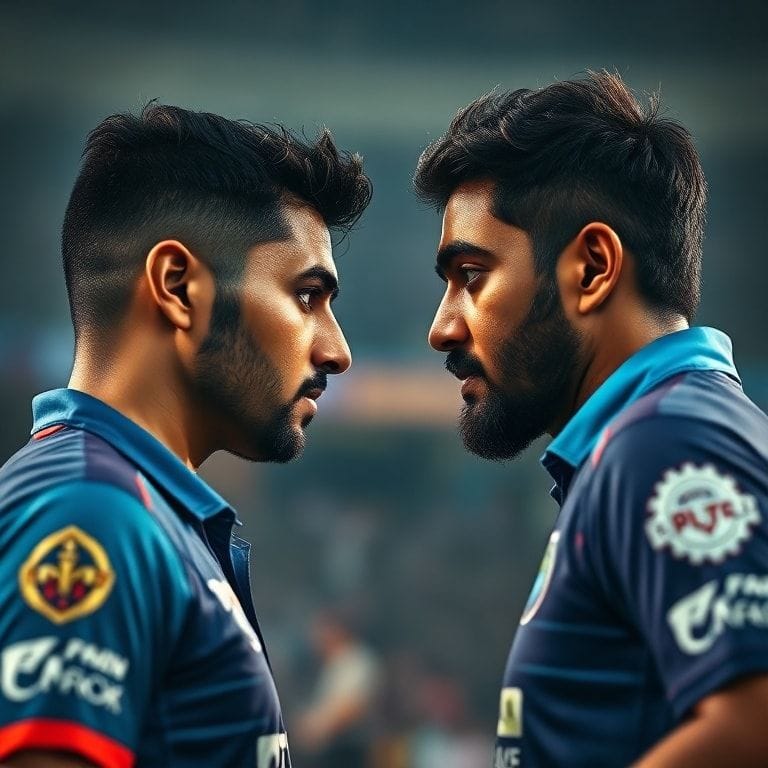
MI vs GT: Tactical Shifts Without Rohit Sharma
MI vs GT: Tactical Shifts Without Rohit Sharma
The Mumbai Indians stepped onto the Ahmedabad carpet without their talismanic opener, Rohit Sharma, and the ripple this creates goes beyond a single game. With the side perched at the brink of elimination, the decision to sit the veteran out due to a hamstring niggle has reshaped the tactical map for both MI and the Gujarat Titans.
The Stats Behind the Strategy
| Player | Matches Played (2026) | Average (SR) | Key Venue Figure |
|---|---|---|---|
| Rohit Sharma | 5 | 48.2 (132) | Struggles on slower tracks; avg 39 at Chennai |
| Hardik Pandya | 7 | 38.7 (138) | Scores 55% of runs on flat Ahmedabad pitches |
| Suryakumar Yadav | 7 | 46.5 (145) | Runs 85% of his innings before the 10th over in Ahmedabad |
| Gujarat Titans Bowlers Avg. | – | Economy 7.4 | Rashid Khan 4.9 on evening dew at N M Stadium |
These numbers explain why MI’s back‑benchers were thrust forward. The debutant Danish Malewar, a right‑hander accustomed to the hard, dry soil of Vidarbha, carries a strike‑rate of 138 in domestic circuits – a profile that fits the quick‑bounce of Gujarat’s ground. Meanwhile, the Titans’ decision to bowl first hinges on the proven low‑scoring dew factor, a pattern documented in five of their last six home matches.
Tactical Shifts and Team Decisions
When the toss went in Gujarat’s favour, the call to field first was not a gamble but a calculated move. The night‑time breeze at the stadium often settles dew on the outfield, turning the second innings into a slick runway for batsmen. Gujarat’s captain, feeling the weight of that statistic, elected to make the most of their world‑class death bowlers – Rashid Khan and Mohammed Siraj – under lights.
For Mumbai, the absence of Rohit forced a reshuffle at the top. The coach, Mahela Jayawardene, promoted Danish Malewar to open alongside Quinton de Kock, pairing a fiery domestic prospect with an experienced international keeper. The idea is simple: let Malewar unleash his natural aggression while de Kock stabilises the innings, buying time for Suryakumar Yadav to build a partnership deeper down the order.
Hardik Pandya, now both captain and the de‑facto anchor, faces a dual role. He is expected to swing the ball with his medium‑pace and, if the chase stalls, accelerate with the bat. The decision to keep him at number 5 rather than the usual number 3 reflects a desire to keep the middle overs under control – a zone where Gujarat’s seamers often bleed runs.
Player Mindset and Role Adaptation
Youngsters like Malewar and Krish Bhagat, the debutant bowler, entered the arena with a mixture of nerves and opportunity. Malewar has spoken about his comfort on the ‘hard, true bounce’ of Ahmedabad’s surface, a condition that rewards back‑foot play and placement. Krish Bhagat, a right‑arm medium pacer, was selected for his ability to swing the ball in the early overs when the humidity is at its peak.
Veteran de Kock, aware that his wicket‑keeping duties will be heavier under the bright lights, adjusted his stance to handle the extra bounce. Suryakumar Yadav, who thrives on improvisation, told the dressing room he’d look to rotate the strike and keep the scoreboard ticking, rather than trying to dominate in a single surge.
Impact on the Tournament and What Lies Ahead
With MI sitting just above the relegation line, every point counts. A win against Gujarat would lift them into the top six, keeping alive any hopes of a playoff push. A loss, by contrast, places them in a must‑win scenario for the final three fixtures against two mid‑table teams and a direct rival.
For Gujarat, a victory not only secures a crucial bonus point but also strengthens their grip on a top‑three berth. Their balanced XI – featuring world‑class all‑rounders like Glenn Phillips and the electric finishing ability of Jos Buttler – means they can adapt from defending low totals to chasing daunting scores.
The broader IPL picture is shifting. Teams that have stared down injury crises are now experimenting with fresh talent, a trend that could reshape the next draft. The performance of Malewar and Bhagat will be watched closely; a strong debut might see them become regulars, while a rough outing could reinforce the argument for cautious squad rotation.
Fan Pulse and Ground Reality
Fans in the stands displayed a mixed reaction to Rohit’s omission. Some chanted his name, while others waved banners for the ‘new blood’. On social media, the narrative split between concern for the veteran’s long‑term health and excitement over a possible ‘changing of the guard’.
From a purely cricketing angle, the crowd’s energy fuels the home side. Gujarat’s supporters, familiar with the venue’s evening atmosphere, have been vocal about the dew and the advantage it gives their bowlers. Their chants for Rashid Khan’s wrist‑spin have grown louder as the night progressed.
In the end, this match is more than a single result; it’s a litmus test for how teams manage adversity, blend experience with youth, and adjust tactics to venue‑specific quirks. The outcome will echo through the rest of the season, shaping playoff chances and the next generation’s place in the league.