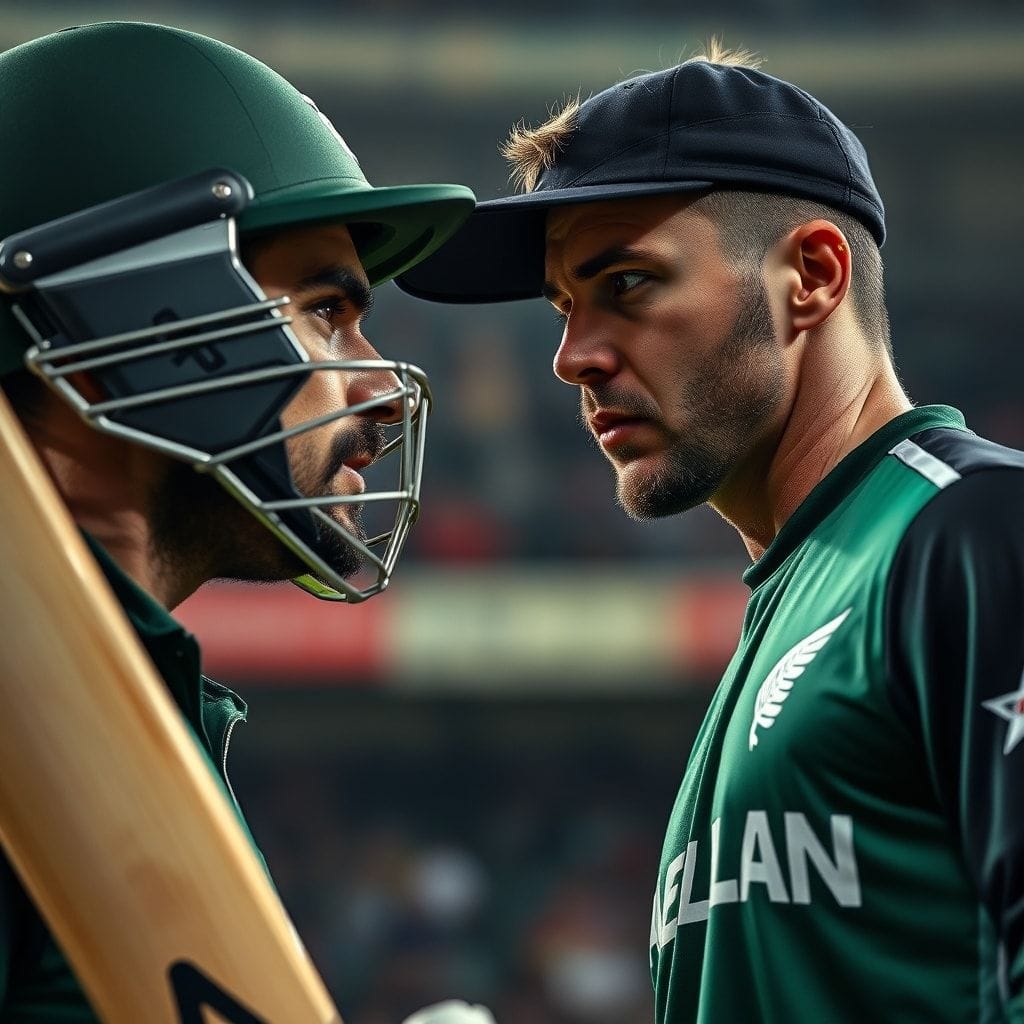
Pakistan vs New Zealand T20 World Cup Showdown: Strategy, Stats, and Player Insights
Pakistan and New Zealand square off at Colombo’s R. Premadasa Stadium in the Super 8 round of the T20 World Cup. The clash matters because both sides arrived as second‑seed qualifiers, yet each carries a distinct momentum that could reshape the knockout picture.
Match context and tactical canvas
From the opening over, the conditions in Colombo whisper of spin, slow bounce and a surface that grips hard once the ball loses its shine. Pakistan’s road to the Super 8 has been highlighted by a thunder‑thrust century from Sahibzada Farhan, while New Zealand have leaned on steady top‑order contributions against Canada. The toss will decide who gets to use the power‑play against a tightening deck, but the real chess game unfolds in the middle overs.
Pakistan’s captain Salman Ali Agha will likely elect to field first, trusting the “mystery spin” duo of Usman Tariq and Abrar Ahmed to snarl New Zealand’s chase. Their variations have already paid dividends on similar pitches in the subcontinent, where turning gets more pronounced after the fourth over. If the Black Caps win the toss, they will need to set a target above 160, otherwise the spin‑friendly groove could bleed runs in the final phase.
Team decisions and player roles
Batting first, Pakistan’s opening pair of Fakhar Zaman and Khawaja Nafay will try to exploit the short‑run boundaries before the ball settles. Zaman’s ability to cut across the line pairs well with Nafay’s preference for late‑pulls, a tactic that works on the slightly dead‑ish surface at Premadasa.
Middle‑order, Farhan’s aggressive intent will be the linchpin. His hundred against Namibia showed he can rotate the strike while still finding gaps. Behind him, Babar Azam’s elegance will be tempered by a need to accelerate; a strike‑rate below 130 will invite pressure, but his experience on slow decks could anchor the innings.
Finishing duties belong to Shadab Khan, whose arm‑ball and slower delivery mix thrives on a turning track. He adds 20‑plus runs with a bat that can clear the mid‑wicket fence when the tail needs a push.
New Zealand’s lineup reads differently. Captain Mitchell Santner’s return adds a left‑arm spin option that complements Ish Sodhi’s leg‑spinner. Santner’s experience on South Asian wickets will be crucial, especially when the house‑edge begins to bite.
At the top, Finn Allen and Tim Seifert are tasked with a brisk start, aiming for a 45‑55 run opening stand. Their aggressive loops work best on flatter sections of the ground, but they must respect the low bounce that can turn a simple drive into a slide.
Glenn Phillips, the middle‑order anchor, will blend defense with calculated slogging. Daryl Mitchell’s power‑hitting adds depth; his knack for finding the mid‑wicket barrier aligns with the slower outfield at Colombo, where a well‑timed loft can race to the boundary.
On the fast‑bowling front, New Zealand will rely on cutters and slower balls rather than raw pace. Matt Henry’s ability to swing the ball a few yards before it lands could still trouble the Pakistani bottom order, especially if the pitch offers a bit of seam early on.
Player‑venue linking
Usman Tariq’s previous success at R. Premadasa against Afghanistan demonstrates his capacity to grip the pitch and generate sharp turn. The same grip is likely to reward Abrar Ahmed’s carrom‑board turn, a style that has perplexed New Zealand batsmen in past encounters on the Colombo surface.
For the Black Caps, Mitchell Santner’s left‑arm orthodox spin has historically thrived on Sri Lankan soils, where the ball finds a bit of extra turn after the fourth over. His best figures at this venue came two years ago, with three wickets for under ten runs, proving he reads the surface early.
The Stats Behind the Strategy
| Metric | Pakistan (T20I) | New Zealand (T20I) |
|---|---|---|
| Average runs in first 6 overs | 48.2 | 51.6 |
| Wickets lost in Powerplay | 0.8 | 1.1 |
| Spinners’ economy at Premadasa (last 5 matches) | 6.4 | 7.2 |
| Highest successful chase on this pitch | 162/5 (Pakistan 2023) | 158/6 (NZ 2022) |
The numbers tell a simple story: Pakistan’s spin unit has been tighter on this ground, while New Zealand’s top‑order has a slight edge in the Powerplay. The decisive factor will be whether the Black Caps can post a target that stays above the 155‑165 sweet spot that teams usually defend here.
Tournament impact and what’s next
A win for Pakistan pushes them to the top of the Super 8 table, giving them a clear path to the semi‑finals and a psychological edge over any opponent they meet later. A loss would drop them into a crunch‑time scenario where net‑run‑rate becomes a make‑or‑break factor.
New Zealand, on the other hand, need a victory to keep their semi‑final hopes alive. Falling short means they will have to rely on other results and superior run‑rate, a gamble that rarely pays off in a high‑stakes tournament.
Regardless of the outcome, the next round will pit the winner against either Sri Lanka or Afghanistan, both of which have shown they can gully‑run on slow tracks. The final four will likely be decided by who can extract maximum from spin‑friendly surfaces while keeping the strike‑rate humming.
Fan perspective and grounded opinions
The diaspora across the globe is buzzing. Pakistani fans point to Farhan’s century as proof that the batting order can scorch the slow decks, while New Zealand supporters recount the resilience of their middle order in previously low‑scoring games. Social media polls show a split, with a slight lean toward Pakistan because of the home‑grown spin advantage.
On the ground in Colombo, the atmosphere is electric. The crowd’s chants for both teams rise in unison whenever a spinner runs in, aware that the match could hinge on a single turn. Expect a few nervous moments, a few celebratory shouts, and a lot of cricket talk that will linger long after the final over.
Explore more: Super Preview
Cricket Desk: Want more on Associate cricket strategy? Check out our Associate cricket strategy Latest News & Stats.