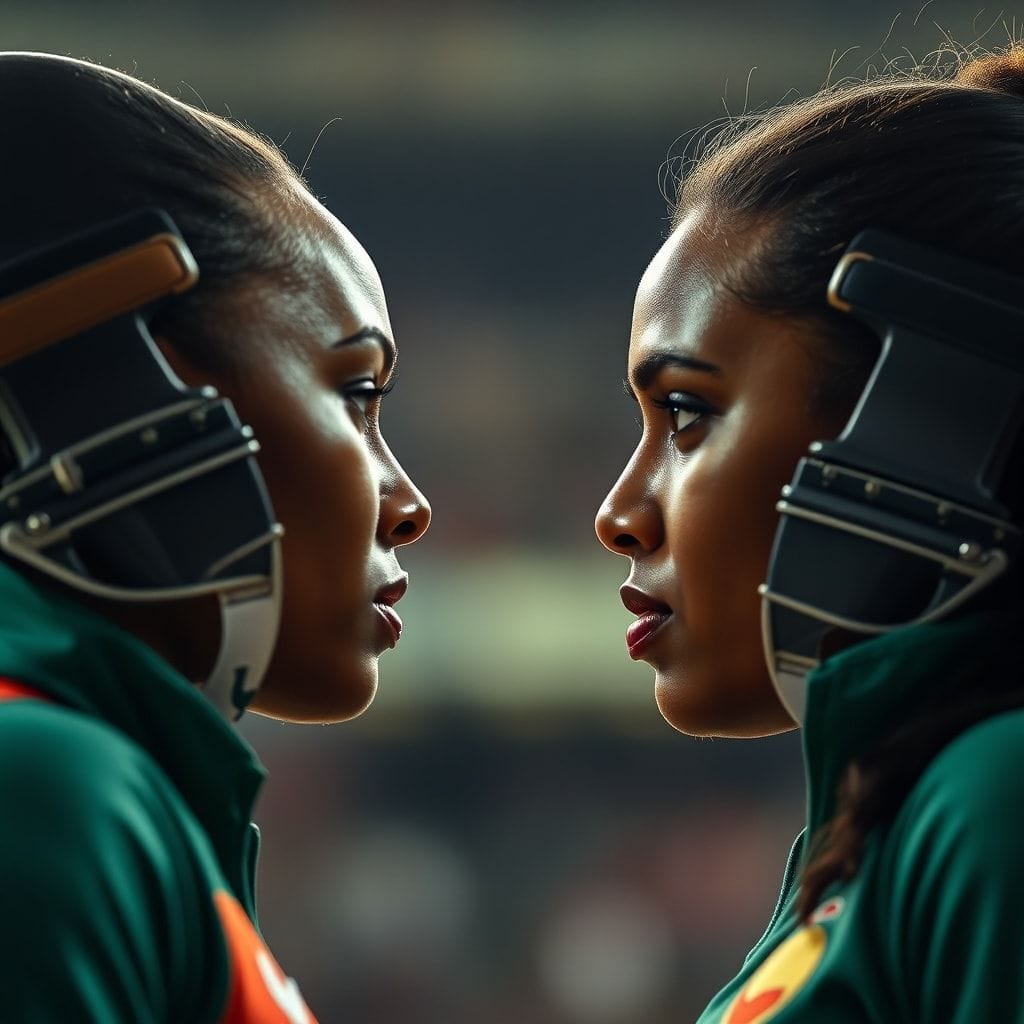
The Evolution of the Women’s Wicket-Keeper Batter: A Look Back at Alyssa Healy’s Legacy
This piece looks at the changing landscape of women’s wicket‑keeper batters, using Alyssa Healy’s swan‑song against India as a springboard. Her farewell ODI and upcoming pink‑ball Test underline how the role has become a blend of fire‑brand batting and razor‑sharp glovework, a shift that ripples through every side in the game.
The Stats Behind the Strategy
| Player | Runs | Matches | Avg | SR | Top Score |
|---|---|---|---|---|---|
| Alyssa Healy (AUS) | 6,472 | 269 | 30.38 | 105.37 | 170 |
| Sarah Taylor (ENG) | 6,147 | 214 | 33.22 | 94.8 | 136* |
| Amy Jones (ENG) | 3,923 | 206 | 28.7 | 89.4 | 129 |
| Trisha Chetty (SA) | 3,871 | 216 | 26.5 | 78.2 | 95 |
| Nigar Sultana Joty (BAN) | 2,634 | 121 | 27.43 | 81.6 | 101 |
The table shows that while Healy’s average sits modestly above 30, her strike rate breaks the 100‑run barrier, a clear indicator of how contemporary keeper‑batters are asked to accelerate. Taylor’s higher average reflects a more traditional, anchor‑style approach, whereas Joty’s numbers highlight a rising Asian influence where keeping duties often coexist with captaincy.
Tactical Evolution Across Formats
When Healy walked out at the Gabba for the pink‑ball Test, the pitch was a sun‑baked slab of red soil that rewards low‑bounce batting. In that environment, a keeper‑batter who can bat deep and rotate the strike becomes a luxury. Australia’s decision to keep Healy at the top of the order, even in the longest format, was a gamble that paid off – she could neutralise the early movement with a mix of defensive blocks and late‑over drives.
In limited‑overs cricket, especially in Hobart’s compact coatings, teams now design the wicket‑keeper’s slot as a power‑play conduit. Healy’s 158‑run blitz came off 98 balls, a grind of 27 fours and two sixes that stretched the field and forced India into defensive bowling changes. The move to let her bowl two overs of medium pace was more a morale booster than a tactical shift, but it underlined her versatility.
Player Mindset and Role Definition
Healy’s mental script for her final ODI was simple: treat the innings as a celebration of a decade‑long partnership with the ball and the bat. She spoke of visualising each boundary as a farewell to a stadium, a crowd, a teammate. That emotional framing is common among modern keeper‑batters – the role now carries a captain‑like responsibility to set the tempo.
Sarah Taylor, in contrast, built her reputation on glovework that gave her team confidence to chase. Her mindset leaned heavily on consistency; she knew a dropped catch could cost a series, so she balanced aggressive strokes with a safety net behind the stumps.
Amy Jones has embraced the middle‑order stabiliser role. At venues like Lord’s, where the swing is pronounced in the mornings, she prefers a measured start before unleashing aggression in the death overs. Her game plan hinges on reading the conditions and protecting the lower order.
Impact on Upcoming Tournaments
The retirement of Healy opens a void for Australia ahead of the 2026 Women’s T20 World Cup. The board is already scouting a successor who can match her power‑play impact. In the short term, Elise Lee (a rising star from Queensland) has been drafted as a backup for the series against England later this year, and her performances on the slower, turn‑friendly Adelaide Oval will be watched closely.
England, with Taylor’s impending retirement, will likely lean on newcomer Josie Groves, whose aggressive batting in T20 qualifiers suggests a shift towards a more attacking mindset.
Bangladesh’s Joty, still in her prime, will lead her side into the Asian Games qualifiers. Her experience across all formats makes her a key figure in a side that has begun to challenge the traditional powerhouses.
Fans, Feelings and the Road Ahead
Supporters across the globe have taken to social media to reminisce about Healy’s iconic moments – the 170 in the 2022 World Cup final still dominates highlight reels. Many fans see her departure as the end of an era, but also an invitation for fresh talent to emerge.
The community buzz around the upcoming pink‑ball Test in Perth centre on the novelty of a night Test for women. Evening lights on the WACA turf combine with a relaxed batting order, prompting discussions on whether more such fixtures will become the norm.
In South Africa, Chetty’s consistent run‑making is often praised for its understated brilliance. Fans appreciate her ability to anchor innings on the bouncy, fast tracks of Johannesburg, a venue that rewards patience over flamboyance.
the evolution of the wicket‑keeper batter reflects a broader shift: teams now value versatility, aggression, and mental resilience. As the next generation prepares to step into those shoes, the cricketing world watches with anticipation, ready for new scores to rewrite the record books.
Cricket Desk: Want more on Alyssa Healy Captaincy? Check out our Alyssa Healy Captaincy Latest News & Stats.