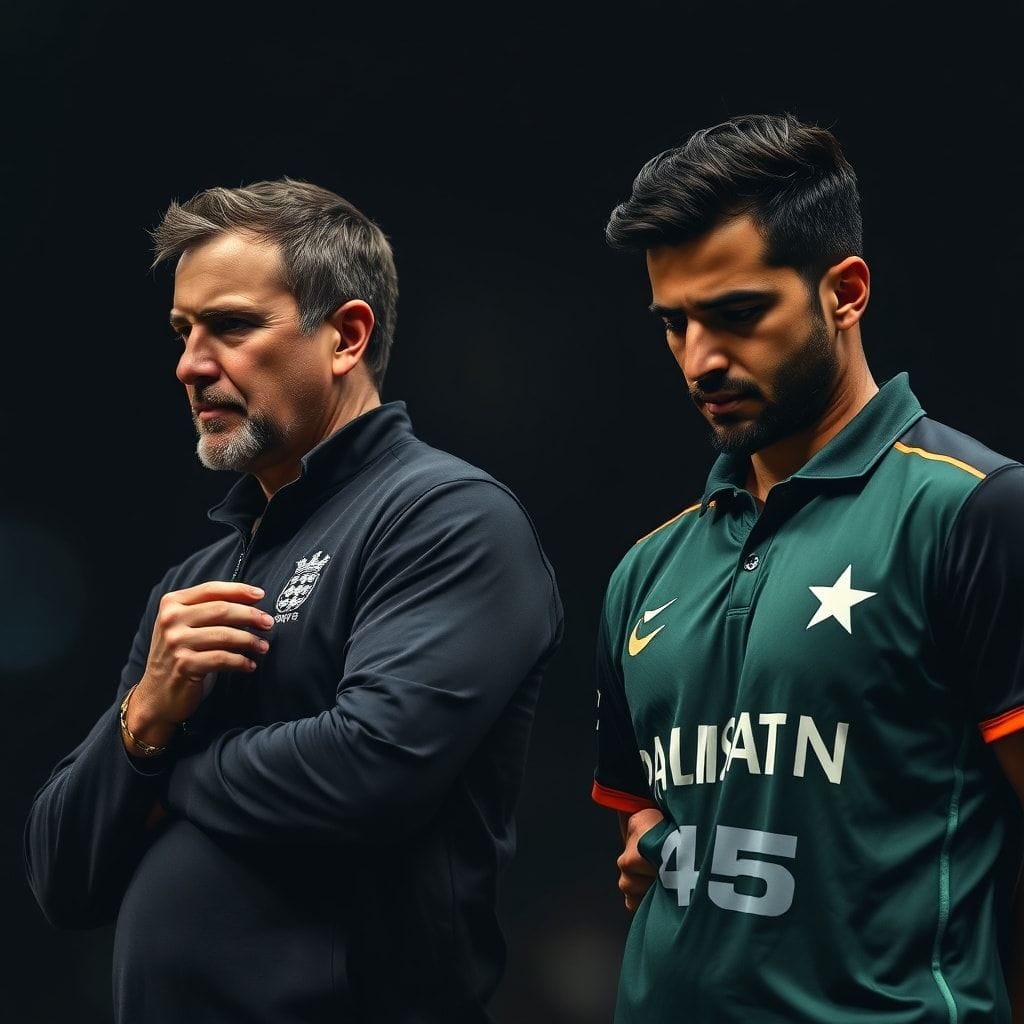
Babar Azam’s T20 World Cup Conundrum: Selection Politics Meets Tactical Realism
Pakistan’s T20 World Cup 2026 campaign has turned into a case study of selection politics versus on‑field performance. Former England skipper Michael Vaughan has spoken openly about why Babar Azam, despite a lean run of 91 runs from six innings, remains an unavoidable fixture in the side.
The discussion matters because it uncovers the delicate balance coaches face when a marquee player’s form dips but his brand and influence stay potent. It also throws light on how Pakistan’s management navigates internal power structures while trying to stay competitive on the global stage.
Context and tactical choices
When the tournament began, Pakistan entered as one of the favourites, thanks largely to a batting line‑up that combined flair with experience. Early losses to England and New Zealand exposed a fragile top order. Babar, usually the anchor at number three, struggled to adapt to the aggressive tempos demanded by flat Caribbean pitches and the fast‑bowl‑friendly surfaces in the West Indies.
Mike Hesson, the Australian coach, responded by reshuffling the batting order. Babar was moved down to number four, a slot traditionally occupied by a steady hand who can rebuild after early wickets. The move turned a potential liability into a safety net: if the first two dismissals fell cheap, the innings would still have a recognizable name at the crease, capable of rotating strike and holding the line.
From a tactical viewpoint, Hesson’s decision also freed up the opening slots for explosive players like Iftikhar Ahmed and Imam-ul-Haq, who could take advantage of the power‑play fielding restrictions. By anchoring the middle, Babar could play at a slightly lower strike rate without jeopardising the team’s momentum.
Player roles and mindset
Babar’s game, built on textbook technique and elegant placement, suits turning tracks. Vaughan noted that in Sri Lanka’s Pallekele Stadium, where the outfield is slow and the pitch offers a little turn, a strike rate of 112 can still push a total to a competitive 160‑170. Babar’s mindset appears to have shifted from chasing big numbers to preserving wickets and rotating the strike. He has openly acknowledged that his natural game does not match the “hyper‑aggressive” style required on flat decks that yield 200‑plus scores.
For the younger power‑hitting unit—Shaheen Afridi, Saifuddin, and Hazratullah—Babar becomes the “insurance policy” Vaughan described. When a wicket falls, they know a calm presence is waiting to shepherd the innings, allowing them to swing freely without the fear of a collapse.
The Stats Behind the Strategy
| Player | Runs (World Cup) | SR | Average | Key Venue Avg (SR) |
|---|---|---|---|---|
| Babar Azam | 91 | 112.34 | 15.2 | Pallekele: 118 |
| Iftikhar Ahmed | 143 | 138.5 | 26.0 | Barbados: 145 |
| Shaheen Afridi (bowl) | — | — | — | Economy Pallekele: 6.7 |
| Virat Kohli (comparison) | 172 | 137.2 | 34.4 | Barbados: 140 |
The numbers tell a clear story. Babar’s strike rate sits comfortably above 110, enough for a medium‑pace pitch, yet trails behind the tournament’s front‑runners, who maintain SRs above 135. The contrast is stark on flat surfaces where totals exceed 200; here, a 112 SR becomes a dampener.
Venue‑specific insights
Pallekele’s red‑soil surface, with its modest bounce and slight turn, aligns with Babar’s strength in using his wrists to manoeuvre the ball into gaps. In contrast, the Caribbean venues – Kensington Oval and Providence Stadium – provide a hard, even wicket that rewards aerial shots and raw power. Pakistan’s batting struggled on these decks, losing early wickets to bowlers who exploit the lack of movement.
In the UAE, where Pakistan practised ahead of the tournament, the pitches are slower and favour spin, echoing the conditions in Sri Lanka. Hesson’s decision to keep Babar in the side was therefore a calculated risk based on venue data rather than sentiment.
Fan perspective and grounded opinions
Pakistan fans are divided. The older cohort, who grew up watching Babar’s elegance against Pakistan’s traditional spinners, still see him as a national treasure. They argue that benching him would send the wrong message to the cricketing hierarchy that talent can be discarded for short‑term results.
Younger supporters, influenced by social media hype around power hitting, are less forgiving. They point to the low strike rate and claim that Babar’s presence creates a “slow‑burn” mentality, hampering the team’s ability to chase 200‑plus totals. Online polls during the World Cup showed roughly 55% of respondents wanting a more aggressive number at number four.
From a pragmatic standpoint, most fans appreciate Hesson’s diplomatic handling – repositioning Babar rather than dropping him outright. The compromise keeps the locker‑room harmony intact while still allowing the side to field more aggressive talents up the order.
Tournament impact and what comes next
Pakistan’s final group‑stage match ended in a narrow defeat, leaving them on the brink of elimination. The bench‑warmers — especially the hard‑hitting middle‑order options like Fakhar Zaman and the young all‑rounder Saad Nasim — will be under the microscope. If Hesson persists with Babar at four, the onus falls on those power hitters to deliver the “camaros” that push the total above 190.
Looking ahead to the knockout stages, if Pakistan qualifies, the next venue is likely to be a spin‑friendly stadium in South Africa. That scenario could vindicate Vaughan’s assessment: Babar can thrive on turning tracks, ensuring a steady platform for his teammates to launch from.
should the team advance to a flat, high‑scoring arena in the West Indies, the pressure on Hesson to either gamble on a more explosive lineup or adapt Babar’s role again will intensify. The coaching staff may consider promoting a hard‑hitting finisher to number six, turning the middle order into a dual‑anchor system.
Final thoughts
The Babar debate encapsulates a broader truth about modern T20 cricket: performance metrics intertwine with cultural weight. Michael Vaughan’s candid take spotlights the reality that a player’s off‑field influence can often outweigh a temporary dip in runs. For Pakistan, the challenge is to harness Babar’s technical solidity while surrounding him with batsmen who can accelerate when the scoreboard demands.
Whether that balance will be enough to lift Pakistan past the group stage remains to be seen, but the conversation itself offers a glimpse into the evolving chess‑board that is international T20 cricket.
Cricket Desk: Want more on Babar Azam? Check out our Babar Azam Latest News & Stats.