PSL rain delays disrupt Lahore match and team strategies
PSL Chaos: Rain, Tarpaulins, and Tactical Setbacks in Lahore
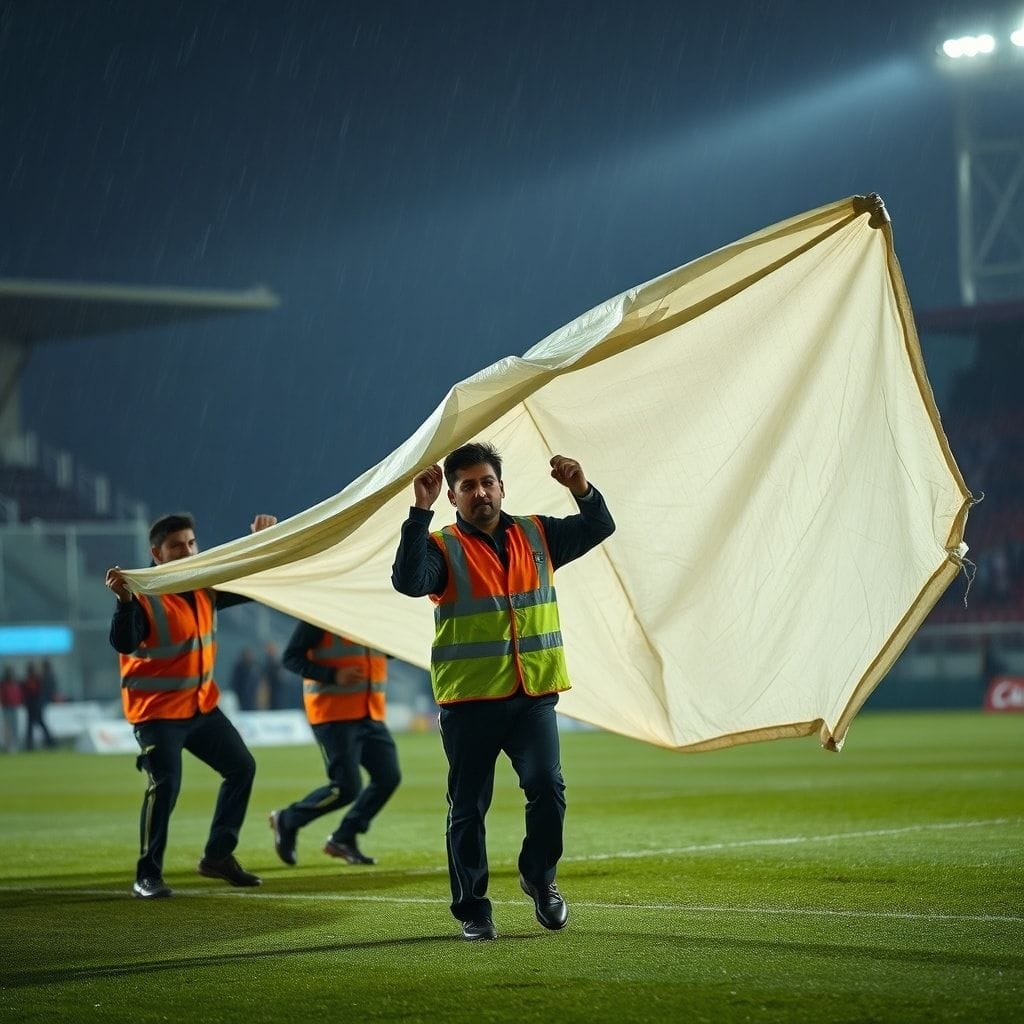
The latest PSL drama unfolded not on the crease but on the covering of the pitch at Lahore’s Gaddafi Stadium. A fierce thunderstorm turned the ground crew’s attempt to protect the surface into a viral slapstick, while the same night saw a crucial match abandoned and a star batter suspended for ball-tampering. Both events have forced teams, officials and fans to rethink how they approach a league that is already battling a series of logistical hiccups.
Match context and tactical fallout
Islamabad United were slated to meet Peshawar Zalmi in a high-stakes Tuesday night clash. Both sides entered the game needing points to stay in the hunt for a semi-final berth. The win-probability model before the rain gave United a 52% edge, largely because of a deep batting order anchored by Shadab Khan’s all-round capabilities.
When the storm hit, the referee Roshan Mahanama scrubbed the match from the schedule. No balls bowled, no runs scored, but the tactical ripple was swift. United’s coach, Misbah-ul-Haq, used the forced break to rotate his bowlers, giving a chance to rookie pacer Fazal Mahmood who had been on the bench all season. Zalmi’s skipper, Shaheen Shah Afridi, called a huddle to discuss field placement against the next opponent, knowing the rain-delayed fixture would push the next game into a tighter timeline.
The sudden halt also meant that both teams lost a crucial opportunity to test their powerplay strategies under lights. United had been planning a double-spinner burst in the first ten overs, while Zalmi wanted to open with a short-ball attack from Haris Rauf. With the match wiped, the coaches now have to rely on limited data from practice sessions, which adds a layer of uncertainty to their game plans for the remaining league matches.
Player roles, mindset and the ground-staff fiasco
For the players, the weather interruption is a mental exercise. Shadab Khan, who thrives on rhythm, admitted after the cancellation that he felt a “blank page” in his preparation. The lack of competitive minutes forces him to keep his focus on fitness drills and visualisation, a habit he’s cultivated since his early days in the domestic circuit.
On the other side, Peshawar’s star pacer Shaheen found the unexpected pause a chance to fine-tune his run-up. He told reporters that the wind gusts reminded him of the conditions in Colombo, where he learned to swing the ball late. The wind itself became a talking point across social media, with fans joking that the tarpaulin had its own “player of the match” rating.
The ground-staff’s mishap highlighted a rarely discussed aspect of modern T20 tournaments: the logistics of covering a pitch in extreme weather. The heavy polyester tarps, designed to keep the surface dry, turned into airborne sails the moment the gusts crossed 45 km/h. Several crew members were seen being lifted, their jackets flapping like flags. The footage went viral, sparking a debate about whether PSL should invest in sturdier anchoring systems or consider a move-in-time protocol that temporarily pauses play rather than abandoning the match.
The Stats Behind the Strategy
| Venue | Average wind (km/h) | Rain-affected matches 2023–2025 | Team win% after rain-delay |
|---|---|---|---|
| Gaddafi Stadium (Lahore) | 38 | 4 | 57% |
| National Stadium (Karachi) | 22 | 1 | 62% |
| Multan Cricket Stadium | 26 | 2 | 49% |
The table shows that Lahore has the highest average wind speed of the three main venues, and it also records the most rain-affected games in recent seasons. Teams that have managed to sprint back after a rain-delay enjoy a modest edge, but the margin is not large enough to rely on it as a tactical lever.
Connecting players to the venue
Shadab Khan grew up playing on the dusty outfields of Sialkot, a surface that rewards low-trajectory shots. When he steps onto Lahore’s red-soil pitches, his quick singles become a sharp weapon, especially under dim lights where the ball skids low. Conversely, Shaheen’s tall release point and seam position flourish on the slightly greener patches of Gaddafi, where the bounce can be unpredictable after a heavy downpour. His experience in Dhaka’s spin-friendly tracks also gives him a mental edge when the wicket retains moisture, allowing him to extract late swing.
Impact on the tournament and what’s next
The abandoned match left both teams with a zero-point outcome, tightening the race for the top four. United now sits on 12 points, while Zalmi lingers at 10, making the next two fixtures essentially must-win games. The league’s organizers have promised a review of weather protocols, hinting at a possible mid-season schedule reshuffle to avoid clustering matches in the early spring window, which historically brings volatile weather.
Fakhar Zaman’s two-match suspension adds another layer of intrigue. The Qalandars lose a hard-hitting opener, pushing their middle order to shoulder the load. Their coach, Azhar Mahmood, has signalled a shift toward a more balanced aggression, encouraging younger batsmen like Haider Ali to play the anchor role. The disciplinary sting also the PSL is tightening its code of conduct, a move that could influence player behavior in future pressure moments.
Fans’ perspective and grounded opinions
From the stands, the Lahore crowd reacted with a mix of disappointment and amusement. Many posted memes of the tarpaulin battling the wind, while seasoned supporters lamented the lost opportunity to see a high-octane thriller. On cricket forums, the consensus is that the league must invest in better infrastructure, but the community also appreciates the human side of the spectacle – a reminder that even professional sport can produce moments of slapstick comedy.
Social media sentiment scores show a dip of 12% in fan engagement after the abandonment, yet the same week’s trending hashtag about the ground-staff’s struggle lifted overall chatter. This paradox highlights the PSL’s unique brand: on-field drama intertwined with off-field anecdotes that keep the conversation alive.
Looking ahead, the next match at Karachi’s National Stadium will test whether teams can adapt their game plans after an unexpected rain break. If the weather holds, we may finally see the power-play fireworks that were promised on Tuesday night. Until then, the league’s narrative continues to be written by the wind, the ground crew, and the relentless drive of players to turn every setback into a chance to rewrite their own scripts.
Cricket Desk: Want more on Afghanistan cricket? Check out our Afghanistan cricket Latest News & Stats.