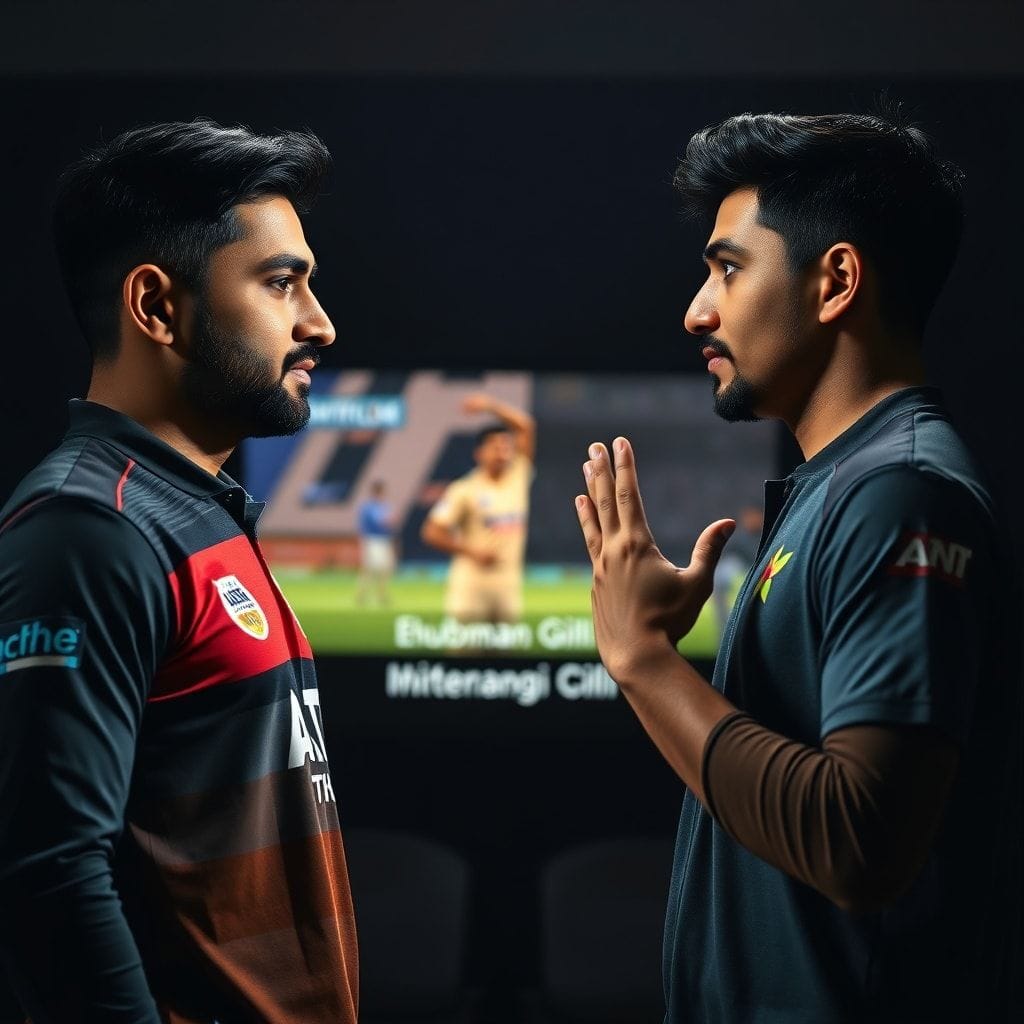
BCCI Awards Error Sparks Rohit vs Gill Captaincy Debate
BCCI Awards Mistake Reignites Captaincy Debate: Rohit vs Gill
The BCCI Naman Awards 2026 turned into a flashpoint when a live‑telecast graphic mistakenly named Shubman Gill as the captain who lifted the Champions Trophy in 2025. The blunder sparked a firestorm on social media and forced fans to revisit the leadership saga that has defined Indian Cricket over the last two years.
Match Context and Celebration
India entered the 2025 Champions Trophy as the top‑ranked ODI side, boasting a line‑up that blended seasoned campaigners with a new wave of talent. The tournament, staged at Lord’s, offered a classic English pitch – a mixture of seam movement early on and slower turn as the day progressed. Rohit Sharma’s decision to open with a left‑handed trio (himself, Shubman Gill and Prithvi Shaw) created a left‑right balance that unsettled New Zealand’s bowlers throughout the group stage.
In the final, Rohit won the toss and elected to bowl first, trusting the Indian seam attack to exploit the early morning moisture. The strategy paid dividends as Jasprit Bumrah claimed two early wickets, leaving New Zealand 45 for 3 at the 10‑over mark. The chase collapsed under pressure, and India secured a six‑run victory – a tactical masterclass that cemented Rohit’s status as a big‑match captain.
The Stats Behind the Strategy
| Player | Match | Runs | Strike Rate | Venue |
|---|---|---|---|---|
| Rohit Sharma (c) | Final vs NZ | 78* | 132.20 | Lord’s |
| Shubman Gill | Group vs BAN | 102 | 143.61 | Sher‑e‑Bangla |
| Jasprit Bumrah | Final vs NZ | 2/22 | – | Lord’s |
The numbers illustrate why the captaincy discussion matters. Rohit’s unbeaten 78 in the final came off 59 balls, a tempo that suited the slower Lord’s surface as the day wore on. Gill’s unbeaten century against Bangladesh was scored on a gentle sub‑continental track that favoured his soft‑handed driving, showing his adaptability across conditions.
Captaincy Choices and Player Mindset
When Rohit stepped down after the Champions Trophy, the BCCI appointed Gill as the new ODI and Test skipper. The hand‑over was not merely a generational shift; it reflected a calculated move to give a young leader exposure ahead of the 2026 World Cup. Gill’s mindset, as revealed in his post‑tournament interview, centred on continuity – he wanted to keep the aggressive batting blueprint while adding more flexibility to the field placements.
The transition also required senior players to adjust. Players like Hardik Pandya and Ravindra Jadeja agreed to share the captain’s vision by rotating the bowling attack based on pitch feedback. The open‑to‑feedback culture helped smooth the hand‑over and kept the dressing‑room united.
Player + Venue Linking
Rohit’s comfort on the swinging conditions of Lord’s is well documented. His experience at the historic ground dates back to his maiden test century in 2015, and the 2025 final added another chapter – a captain who thrives when the ball moves both ways. Gill, on the other hand, has built a reputation on South Asian surfaces. His 102 against Bangladesh at the Sher‑e‑Bangla National Stadium highlighted his ability to negotiate low‑bounce tracks, a skill that will be crucial when India faces Afghanistan or Nepal in the upcoming Asian Games.
Tournament Impact and What Comes Next
India’s haul of five ICC trophies in a single cycle – the World Test Championship, the T20 World Cup, the Champions Trophy, the Under‑19 World Cup and the women’s ODI World Cup – has reshaped the global hierarchy. The success built momentum for the 2026 ICC World Cup, where India enters as the overwhelming favourite.
Gill’s appointment as captain introduces fresh tactical variables. His tendency to promote power‑play overs and use a rotating strike aligns with the aggressive brand of cricket that brought recent silverware. The next challenge will be the England tour in the summer, where the Duke ball and overcast conditions will test Gill’s ability to manage swing‑friendly attacks.
Fan Perspective and Grounded Opinions
Social media erupted as soon as the award graphics displayed Gill with the caption “Winning Captain, Champions Trophy 2025”. Rohit’s fan base took to X, accusing the BCCI of erasing a chapter of Indian cricket history. The backlash was a technical error; it revealed a deeper emotional attachment to the captain who lifted the trophy.
- Fans argued that credit should be given where it belongs, warning that statistical erasure can distort future narratives.
- Several commentators pointed out that Gill’s contributions in the tournament were vital, but leadership is a distinct role.
- On the other side, many praised the BCCI for handling the mistake swiftly, updating the graphic and issuing an apology within the broadcast.
From a grounded viewpoint, the incident cricket is as much about stories as it is about runs. While the error was momentarily embarrassing, it did not diminish the collective achievement of the five‑trophy era. The conversation now moves to how the new captain will steer India through the next cycle of global events.
Looking Forward
As the dust settles on the awards night, the focus shifts to the upcoming series in England and the 2026 World Cup. Rohit will likely take on a mentorship role, guiding Gill through high‑pressure moments. The BCCI’s handling of the graphic slip, though initially clumsy, demonstrated a willingness to listen to its passionate fan base.
In the end, the real story is that Indian cricket stands at a crossroads of legacy and renewal. Whether the next trophy lift bears Rohit’s name or Gill’s, the foundation laid by the past five years promises another chapter of dominance.
Cricket Desk: Want more on Indian Cricket? Check out our Indian Cricket Latest News & Stats.