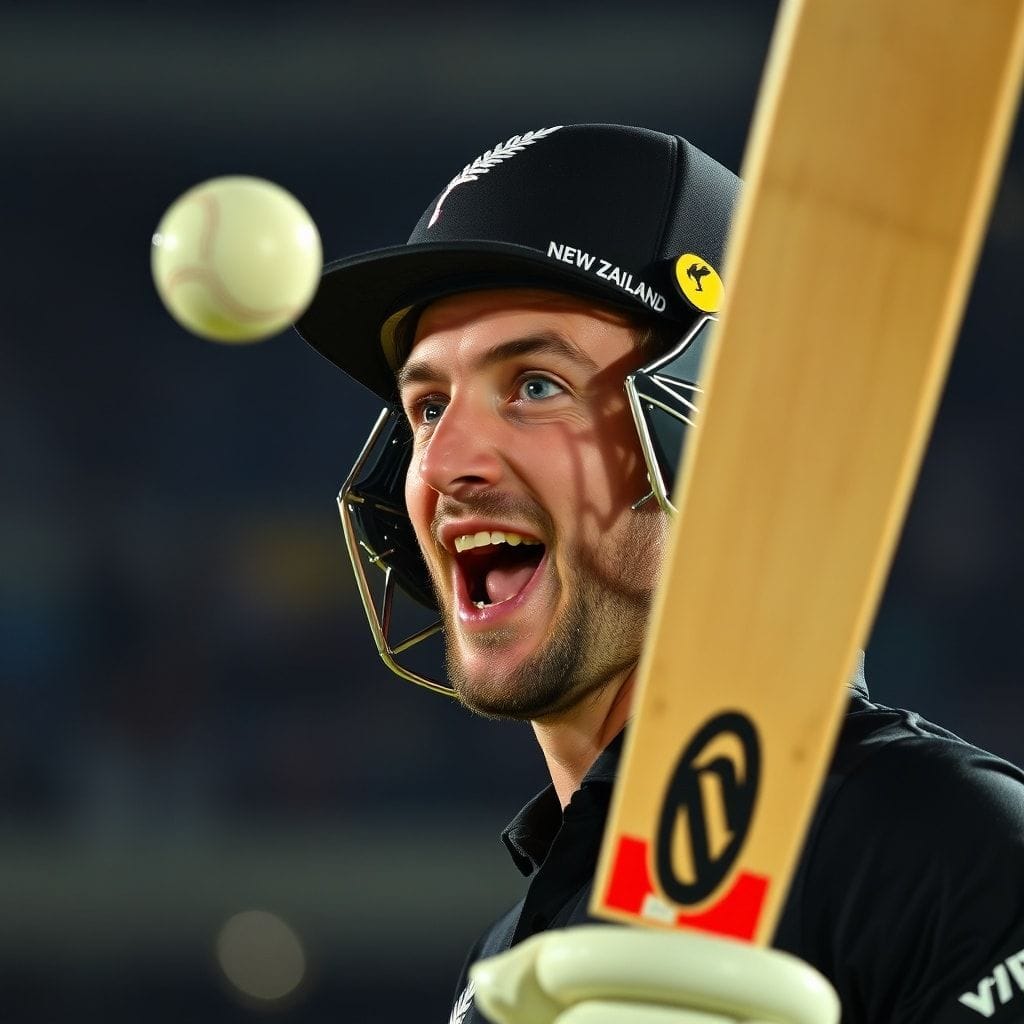
Finn Allen’s record T20 World Cup century powers NZ to final
Netizens go wild as Finn Allen smashes a record-breaking century to send New Zealand into T20 World Cup final
Finn Allen turned the semi‑final clash at Eden Gardens into a personal masterpiece, carving a 100 off just 33 balls to steer New Zealand into the T20 World Cup 2026 final. The innings rewrote tournament records and gave the Black Caps a statement win over a fighting South African side.
The Stats Behind the Strategy
| Metric | Finn Allen | Team Average (NZ) | Opposition (SA) Bowling Figures |
|---|---|---|---|
| Runs (off 33 balls) | 100* | 45.3 | 9.5 runs per over |
| Strike Rate | 303.03 | 138.7 | 115.2 |
| Boundary Count | 10 fours, 8 sixes | 5 fours, 2 sixes (avg per innings) | 4 wickets lost |
| Dot Balls | 4 | 12 | 11 maidens (in 20 overs) |
The table highlights how Allen’s strike rate eclipsed the NZ average by more than a full run‑a‑ball, while his boundary tally doubled the team norm. South Africa’s bowlers, who had been economical in the early phases, were forced into a 9.5‑run‑per‑over onslaught once Allen opened the floodgates.
Match Context and Tactical Landscape
Eden Gardens, with its historic slow‑turning wicket and a crowd that can swing momentum, was the backdrop for a do‑or‑die encounter. New Zealand entered the game as the tournament’s unbeaten side, while South Africa had survived a gritty quarter‑final against England. The NZ board had opted for a start‑heavy approach, opening with Allen and Tim Seifert, both known for taking the attack to the fence.
The decision to give Allen the green light in the first over was rooted in his recent IPL form, where he flourished on pitches that offered a mix of bounce and low‑pace grip. Eden Gardens, though traditionally a batting paradise, tends to slow down after the first 10 overs, making early acceleration crucial. Allen’s aggressive swing at the ball, combined with his knack for finding gaps in even the tightest lines, suited the venue’s early‑phase speed.
Player Roles, Mindset, and How the Game Unfolded
Allen approached the chase like a shooter stepping onto a range – eyes fixed, breathing steady. After a solid start, he pushed the strike rate beyond 250 within ten balls, forcing the South African bowlers to rethink lengths. His mix of lofted drives and sharp cuts showed a clear intent: dominate the powerplay and hand the middle overs to the more conventional NZ middle order.
Tim Seifert, playing the classic anchor‑attacker hybrid, provided the platform. His 58 off 33 balls was a blend of restraint and aggression, ensuring the partnership never stalled. When Seifert fell to Rabada, the damage was already done – NZ had a 117‑run opening stand, the highest for any T20 World Cup knockout.
How the Conditions Shaped Decisions
Eden Gardens’ red‑clay surface, after a night of dew, tends to grip the ball early before flattening. South Africa’s captain Aiden Markram elected to open with the swing bowler Kagiso Rabada, hoping the early moisture would help seam movement. The plan back‑fired as the ball skidded on the slower surface, allowing Allen to free‑hit the deliveries. Later, the Proteas turned to the spin duo of Keshav Maharaj and Corbin Bosch, but Allen’s improvisation – pulling and sweeping with equal confidence – nullified any spin assistance the pitch could offer.
Marco Jansen’s late‑innings heroics (55* off 30) pushed South Africa to a competitive 169/8, but the target was still below New Zealand’s typical chase ceiling on a ground that rewards aggressive intent. Allen sensed the window and accelerated, converting his initial on‑fire start into a historic century.
Tournament Impact and What Lies Ahead
With this win, New Zealand booked a spot in the final at Ahmedabad’s Narendra Modi Stadium, a venue that contrasts Eden Gardens with its faster, greener pitches. The Black Caps now face a South Asian side accustomed to low‑bounce decks; their success will hinge on replicating the aggression that paid off in Kolkata while adapting to the quicker surface.
South Africa, despite the loss, showed resilience through Jansen’s death‑overs surge. Their experience in high‑pressure chases will serve them well in the upcoming group matches, especially as they look to fine‑tune the death‑bowling plan that faltered against Allen’s onslaught.
Fan Perspective and Grounded Opinions
The reaction on social media was instantaneous. New Zealand supporters flooded Twitter with GIFs of Allen’s six over mid‑off, chanting “Allen! Allen!”. South African fans, while disappointed, lauded Jansen’s 55* as a silver‑lining, noting that the Proteas were still within striking distance before the blitz.
Cricket analysts highlighted the strategic gamble of sending Allen out of the gate. Most agreed that the Black Caps’ willingness to attack, rather than settle for a measured chase, set a new benchmark for knockout mentalities. Critics, warned against over‑reliance on a single explosive innings, pointing out that the deeper batting order must also step up if the final presents a tighter target.
In the stands, the atmosphere was electric – a mix of awe at the historic century and nervous anticipation for the final showdown. As fans replayed the blast of Allen’s sixth‑over six, the consensus was clear: New Zealand have declared their intention to bring the coveted trophy home, and the final will be a true test of whether aggression can outlast strategy on the biggest stage.
Cricket Desk: Want more on 2026 T20 World Cup? Check out our 2026 T20 World Cup Latest News & Stats.