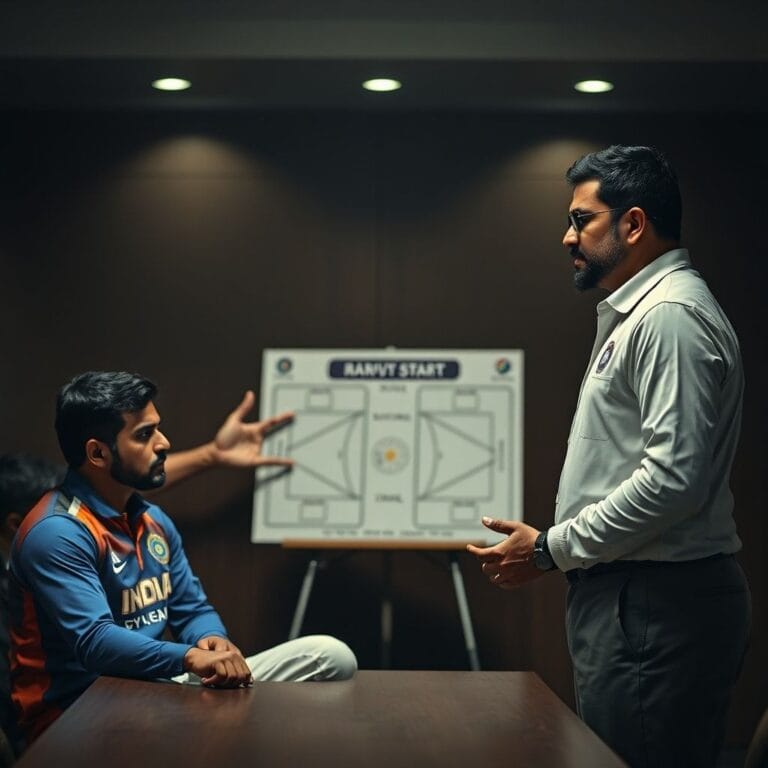
England and South Africa Top T20 World Cup 2026 Favourites
Gavaskar’s T20 World Cup 2026 Favourites: Why England and South Africa Lead the Pack
Legendary cricketer Sunil Gavaskar stirred conversation by naming England and South Africa as top contenders for the T20 World Cup 2026, placing them ahead of host nation India. This unexpected take invites a deeper look into what separates elite teams—not just through star power, but via strategic depth, numerical consistency, and player adaptability across venues.
The Stats Behind the Strategy
| Team | Matches Played | Wins | Net Run Rate | Key Performers (Runs / Wickets) |
|---|---|---|---|---|
| England | 6 | 5 | +1.24 | Harry Brook 312 / Adil Rashid 12 |
| South Africa | 6 | 5 | +1.09 | Kagiso Rabada 14 / Rassie van der Dussen 298 |
| India | 6 | 4 | +0.87 | Rishabh Pant 276 / Jasprit Bumrah 11 |
Their win percentages exceed 80%, supported by strong net run rates and balanced contributions from key players. While India remains competitive, these metrics highlight the consistency gap between the frontrunners and others.
Tactical Choices and Team Decisions
England’s tactical evolution was evident after an early setback. Promoting Harry Brook stabilized the innings while unlocking acceleration opportunities. Their reliance on Adil Rashid’s dual role—a spinner capable in both middle and death overs—adds unpredictability that most sides struggle to counter.
South Africa leaned on their pace attack led by Kagiso Rabada. His control over swing and yorker execution made him indispensable. Seam rotation ensured freshness throughout demanding schedules, reducing injury risks significantly.
India’s strategy emphasized all-round utility. Ruturaj Gaikwad’s promotion at Eden Gardens offered left-handed resistance against spin. Captain Rohit Sharma’s trust in Axar Patel during closing stages showcased preference for adaptable options over pure hitters.
Player Mindset and Venue Connections
Jasprit Bumrah’s dominance at New Delhi’s ADC reflects his mastery over slower surfaces. Subtle variations like altered seam angles and slower deliveries exploit pitch characteristics effectively.
Harry Brook thrives on fast Australian tracks such as SCG where clean striking aligns with surface responsiveness. His calculated aggression in Auckland underscored how familiarity enhances performance.
Kagiso Rabada adapts impressively even on spinning subcontinent tracks like Colombo CC. Extra training sessions tailored to mimic those conditions helped refine his approach further.
Tournament Impact and What Lies Ahead
A potential semifinal clash between England and India would test English spin tactics against seasoned Indian batters comfortable with domestic conditions. Alternatively, South Africa versus India pits Protean pace versus resilient middle-order batting.
Bench strength plays a crucial role moving forward. England has explosive finishers like Tom Banton ready to shift momentum instantly. South Africa’s Andile Phehlukwayo brings additional bowling depth. India counters with Suryakumar Yadav’s proven reliability off the bench.
Fan Perspective and Grounded Opinions
Indian fans admire their team’s aggressive style yet recognize consistent output is essential. English supporters view Gavaskar’s assessment as affirmation of recent strategic shifts post-group losses.
South Africans celebrate disciplined field settings and unorthodox bowling choices which often go underappreciated. Fans globally appreciate teams blending innovation with tactical discipline.
Gavaskar’s insight reminds us—the T20 World Cup rewards mental sharpness and collective balance more than individual brilliance alone. Upcoming fixtures will determine if statistical leaders maintain supremacy or if another contender rewrites expectations entirely.
Cricket Desk: Want more on cricket statistics? Check out our cricket statistics Latest News & Stats.