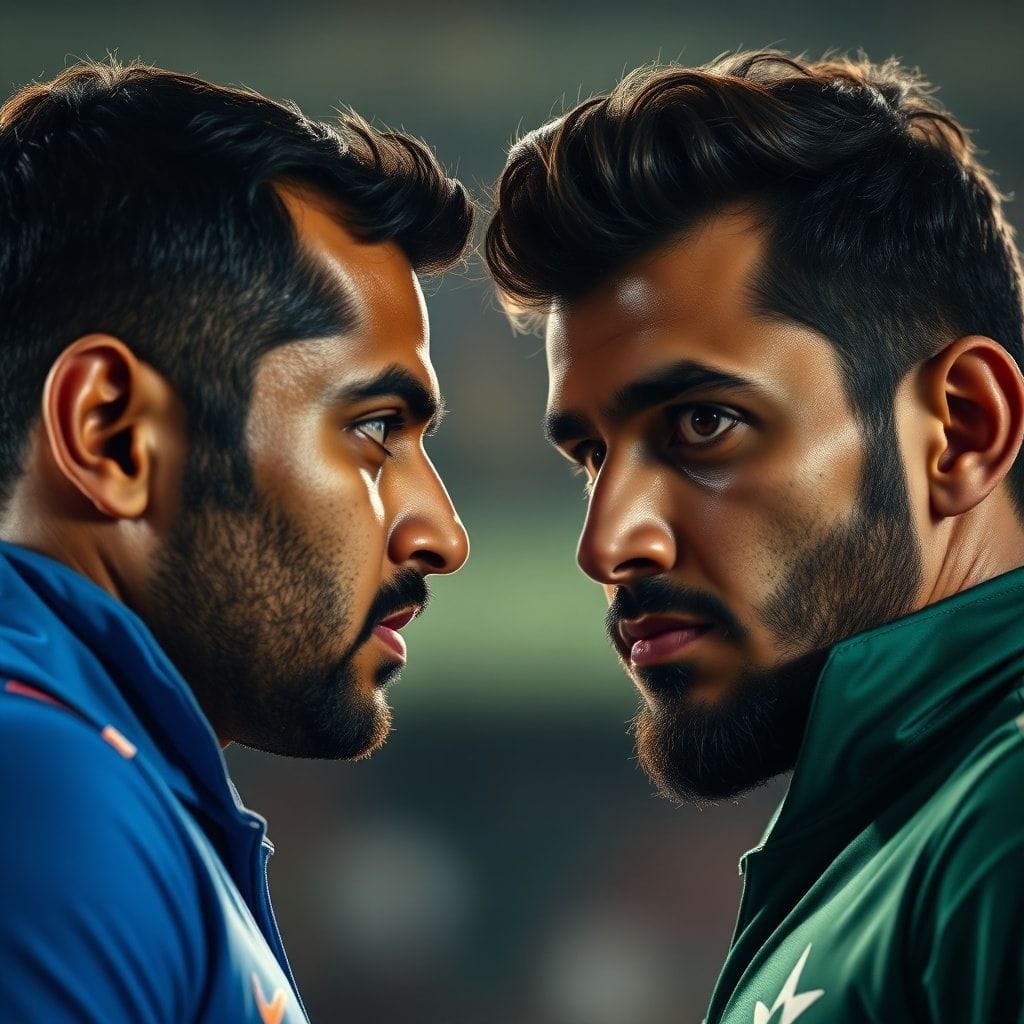
India’s T20 World Cup Squad Prepares for Pakistan Boycott Threat
India’s Road to Colombo: How Yadav’s Squad Is Navigating Pakistan’s Boycott Threat
India’s captain Suryakumar Yadav has told the media that the Men in Blue are packing their bags for Colombo, even as Pakistan’s government has ordered a boycott of their marquee group match. The standoff matters because it could decide who walks away with two points by default and how the tournament’s knockout picture shapes up.
The 2026 T20 World Cup is being staged across three continents, with Group A featuring a mix of familiar rivals and newcomers. India’s itinerary – USA in Mumbai, Namibia in New Delhi, the disputed clash with Pakistan in Colombo, then the Netherlands in Ahmedabad – reads like a road‑trip designed to keep the side in rhythm. The political row over the February 15 fixture arrived just as the Indian camp finished a three‑day camp in Delhi, where they fine‑tuned the opening powerplay routines that have become their hallmark.
Yadav’s press conference on February 5 cut through the noise with a simple line: “Our flights are booked, we are going to Colombo.” That statement did more than reassure fans; it forced the ICC to remind both boards that a forfeit at the R. Premadasa Stadium would hand India two points and slam Pakistan’s net‑run‑rate. In a tournament where a single loss can push a side out of the Super 8s, the stakes are unusually high.
From a tactical standpoint, the Indian selectors have stuck with a blend that proved lethal in the 2024 and 2025 campaigns. The opening pair – Suryakumar himself and Tilak Varma – offer a mix of brute force and calculated aggression, perfect for the hard, low‑bounce decks in Mumbai and Delhi. The middle order still leans on the calm of Hardik Pandya, whose ability to reset an innings after early wickets will be crucial if the team faces the psychological aftershocks of a political drama.
The Stats Behind the Strategy
| Opponent | India Win % (Last 20) | Average Runs Scored | Key Bowler Avg Econ |
|---|---|---|---|
| USA | 95% | 178 | Jasprit Bumrah 6.2 |
| Namibia | 100% | 185 | Hardik Pandya 5.8 |
| Pakistan | 70% | 176 | Yuzvendra Chahal 5.5 |
| Netherlands | 90% | 182 | Mohammed Siraj 6.0 |
The numbers show why the board is confident. Against Pakistan, India has a 70 % win rate in the last 20 T20Is, but the average total of 176 suggests a slight dip in firepower when the opposition bowls tighter. That’s where a second‑phase powerplay – two overs of attacking field placements – could push the score over 190, a target that historically forces Pakistan into a chase that never materialises.
Bowling strategy will adapt to the pitch at Colombo’s R. Premadasa Stadium, a ground known for its true bounce but a surface that slows as the day progresses. Bumrah’s seam‑on‑the‑move approach thrives on that kind of wicket, allowing him to extract movement even when the ball settles. Meanwhile, the wrist‑spinners, Chahal and Rahul, rely on the slower turn that later sessions provide, making them perfect weapons if India needs to defend a high total.
Player and Venue Links
Suryakumar’s own game is built for fast, flat decks – his favorite ground, the Wankhede, offers low bounce that lets him free his lofted drives. In Colombo, the bounce will be a touch higher, meaning he’ll need to stay low and use his wrists more, something he’s practiced during the Delhi camp. Tilak Varma, a product of Mumbai’s hard surfaces, should find the R. Premadasa’s early‑session bounce comfortable, allowing him to rotate strike efficiently.
Hardik Pandya’s experience in Asian conditions goes back to the 2022 Asia Cup, where his ability to slog through short deliveries on slower tracks made a big difference. At Premadasa, the short ball is likely to stay low, so his push‑and‑run style could be a key factor in the later overs if the chase stalls.
On the bowling front, Bumrah’s height advantage helps him generate extra bounce on the harder parts of the wicket, something that will be useful during the opening spell. Siraj, on the other hand, thrives on a crumbling surface where the ball swings more, making him a potential fourth‑change option if the pitch starts to wear.
Beyond the field, the mental angle cannot be ignored. For Indian players, the pressure to not give Pakistan a political victory means they’ll approach the match with a heightened focus on execution rather than emotion. The squad’s internal mantra, as shared by senior members, is to treat the game like any other – a twelve‑over sprint where every ball counts.
Looking ahead, a win in Colombo not only secures two points but also gives India a buffer in NRR that could become decisive in a tight group. If Pakistan shows up despite the boycott, a close contest could swing the momentum of the whole tournament. If the match is forfeited, the narrative shifts to a diplomatic win for India, but the team still has to prove itself against the USA, Namibia, and the Netherlands.
Fans across the subcontinent are buzzing on social media, with many calling for a “no‑politics‑on‑the‑field” stance, while others argue that the boycott is a fair protest. Whatever the off‑field chatter, the cricketing story is clear: Yadav’s side is ready, the schedule is set, and the R. Premadasa Stadium will soon echo with the sound of a bat meeting ball – whether it’s a clash of rivals or a solo walk‑over, the consequences will ripple through the rest of the World Cup.