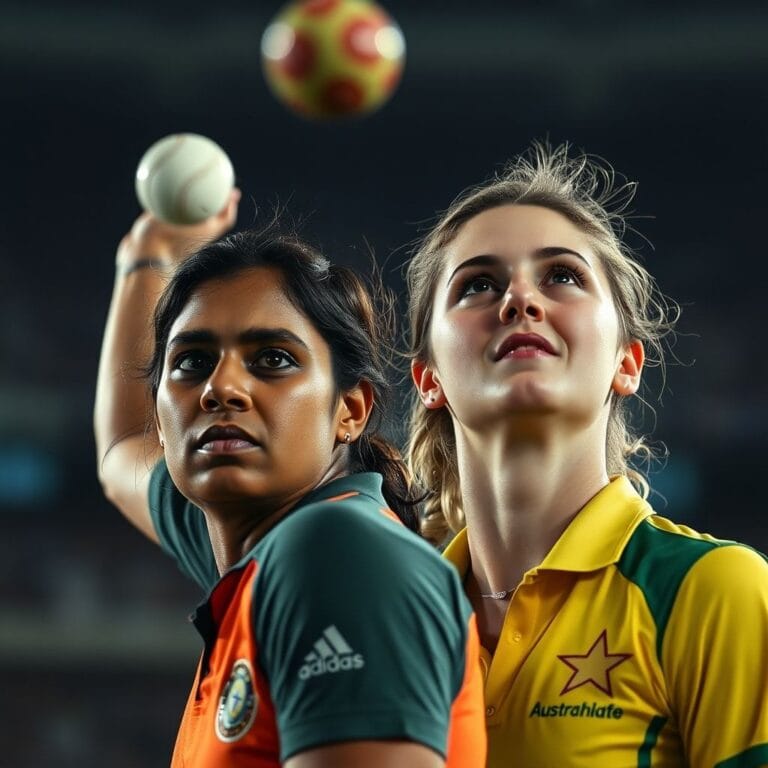
India vs Australia T20 World Cup Showdown: Strategy, Stats, and Stakes
India vs Australia T20 World Cup Showdown: Strategy, Stats, and Stakes
Jemimah Rodrigues has laid out an aggressive plan for India as they face Australia in a must‑win T20 World Cup clash at Lord’s. The encounter could decide who moves on to the knock‑outs, making every tactical choice crucial.
India arrives in London with three wins from four games, but the Aussies have the edge of history and the confidence of defending champions. Rodrigues insists the only way to tilt the balance is to match Australia’s intensity from the first ball, turning the match into a battle of aggression rather than a defensive standoff.
The Stats Behind the Strategy
| Metric | India | Australia |
|---|---|---|
| Win‑loss record vs AUS (WT20I) | 10‑28 | — |
| Average first‑innings score in the last 5 matches | 146 | 152 |
| Top run‑scorer vs AUS (last 3 meetings) | Shafali Verma – 78 | Alyssa Healy – 84 |
| Economy rate of Indian bowlers vs AUS (2023‑24) | 6.8 | 5.9 |
| Net run rate after four games | +2.268 | +1.732 |
The numbers tell a clear story: Australia scores a tad higher on average, and their bowlers tend to be tighter. India’s net run rate is the highest in the group, showing they have the firepower to post and chase big totals when they play positively.
Match Context and Team Decisions
Lord’s presents a unique set of challenges. The pitch usually offers a good bounce with a true carry, but the Duke’s‑approved outfield can be a bit slow under overcast conditions. That means boundary‑hitting demands timing, while spinners get a little turn after a 30‑over spell.
Rodrigues’ call for aggression reflects the venue’s characteristics. By looking to hit early over the covers, India can force the Aussie bowlers out of their comfort zones. The plan also leans on Harmanpreet Kaur’s experience at the top of the order – she can absorb the new ball, rotate the strike, and unleash a big slog when the ball is older.
In the middle, Shafali Verma is likely to be the disruptor. Her ability to take on the seam quickly makes her a natural fit for Lord’s bounce. If she can clear the in‑field early, the required run‑rate drops dramatically, allowing the lower order to play with less pressure.
Bowling choices will be a tug of war between pace and spin. Rajasthan‑born bowler Renuka Singh has a clean‑up spell against the Aussies in past series, and her ability to swing the ball both ways could be decisive in the power‑play. Supporting her, Jhulan Goswami’s experience with the new ball and her subtle variations give India a two‑front‑line attack that can keep Australian batters guessing.
Spin will enter the picture after the 10‑over mark. Poonam Yadav, who turned the tide in the 2020 World Cup semi‑final, is expected to spin the ball the length that suits Lord’s notorious “sticky” wicket under lights. Her ability to bowl a tight line could choke the run‑rate when Australia looks to accelerate.
Player Mindset and Role Clarity
Rodrigues’ own experience of a century against Australia in a World Cup semi‑final adds a psychological edge. She knows what it feels like to dominate that particular opposition, and she wants her teammates to channel that belief.
Harmanpreet Kaur, as captain, has the job of translating the aggressive intent into concrete actions. Her field placements will likely be attacking – short fine leg, slip cordon deep, and a sliding slip for the spinners. By positioning the field aggressively, she signals to the bowlers to aim for wickets, not just containment.
Shafali’s mindset is about getting the ball to the boundary quickly. She has spoken about treating every ball as a chance to hit a six, a philosophy that fits perfectly with the “take the game to them” mantra.
Renuka’s confidence stems from a recent three‑for‑15 against the Aussies in a tri‑series. Knowing she can swing the ball in English conditions fuels her willingness to bowl the first over, even against a power‑hitter like Alyssa Healy.
Tournament Impact and What Comes Next
If India clinches the win, they lock the second spot in the group and keep their net run rate advantage. A loss would push them into a tie‑breaker scenario, where a single run could decide their fate.
A victory also sends a message to the other teams – India is not just a participant; they are a contender that can rewrite a 38‑match record against Australia.
Looking ahead, a win plants India into a semi‑final against either New Zealand or South Africa, both of which favor spin‑friendly tracks. The confidence built at Lord’s could make the transition to those conditions smoother, especially if the spin unit is in rhythm.
Fan Perspective and Grounded Opinions
Indian fans have been vocal on social media, urging the side to stop second‑guessing and play their natural game. The sentiment is clear: “We love our bowlers, but we also love aggressive batting. Bring both together and win.”
Australian supporters, meanwhile, are confident in their depth. They point to the fact that Australia has a 71% win rate in the last ten T20 World Cup matches. Yet, the crowd in London is a mixed bag, with plenty of neutral cricket lovers excited to see a classic England‑style showdown.
From a ground‑level viewpoint, the match could swing on a single moment – a catching slip, a well‑timed six, or a tight over at the death. The players have the tools; the fans have the expectations. All that remains is execution under lights at the home of cricket.